|
|
 |
 |
 |
- DASHUR - The Pyramid of Amenemhat-II
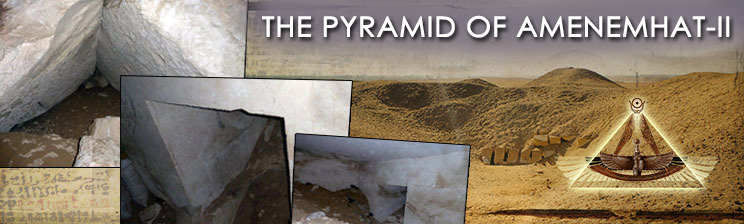
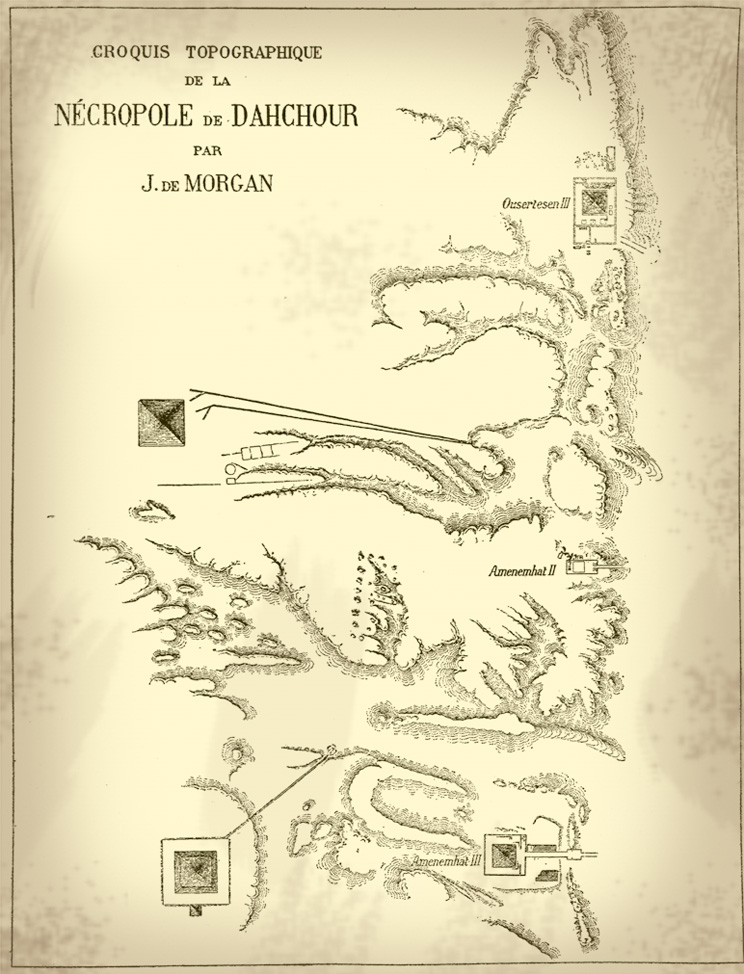
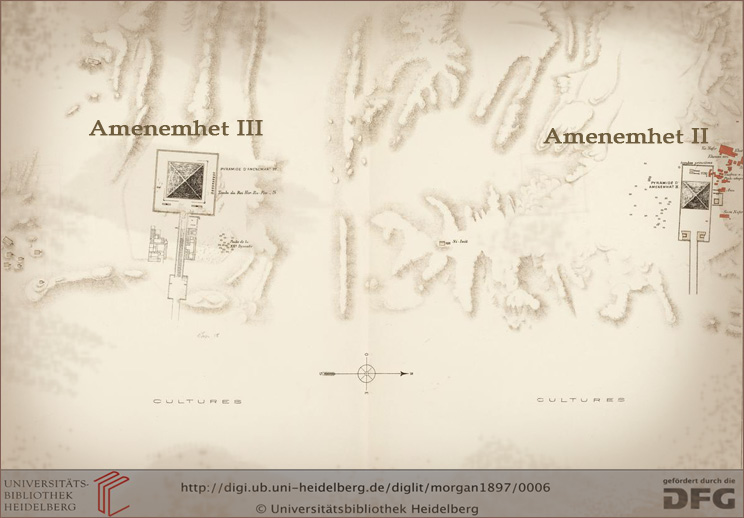
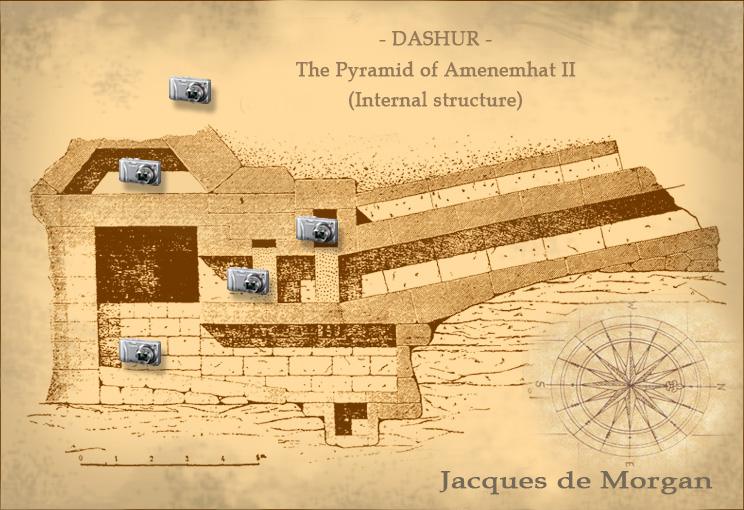
One and a half kilometers to the east of the Red Pyramid of Sneferu, one can see the ruins of the White Pyramid of Amenemhat II, a Pharaoh of the XII Dynasty, son of Sesostris I. Only a part of it's interior rooms have survived from the once majestic structure, and can be accessed through an opening that appeared as a result of the collapse of one of the blocks of the vault of the Releaving Chamber. The original height of the Pyramid and the length of the side of its basewas not determined and still remains unknown. According to the materials of the first researchers, the Pyramid was built of white limestone, which subsequently gave it its second name - "The White Pyramid". In the period from 1894 to 1895, the French archaeologist Jacques de Morgan, who headed the Egyptian Department of Antiquities, established by Auguste Mariette, has conducted the large-scale excavations in the area of the Pyramid of Amenemhat II. The result of his work is available here: ("Fouilles a Dahchour: Mars - Juin 1894"). Below is a diagram of the location of the Pyramid of Amenemhat II, drawn by Jacques de Morgan.
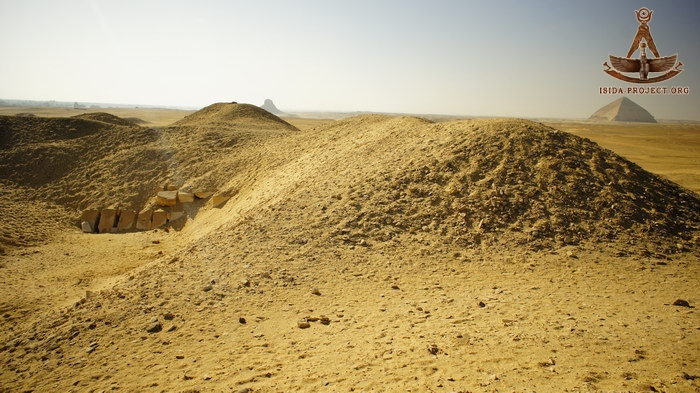
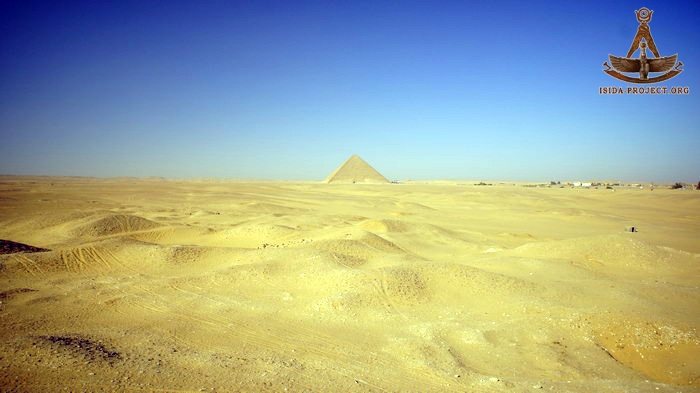
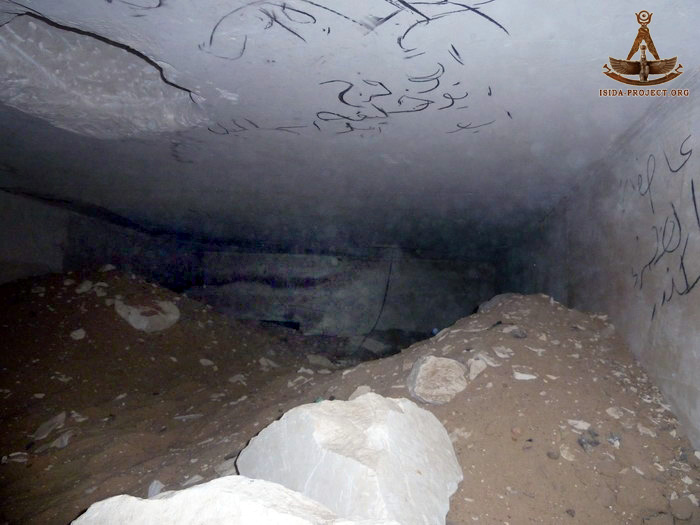
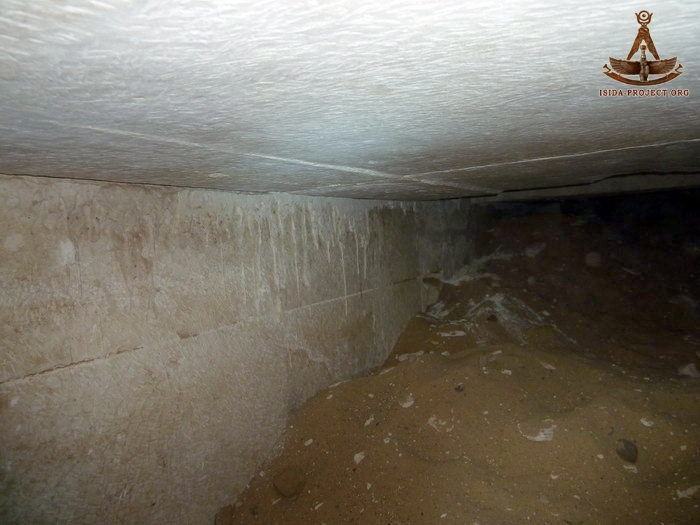
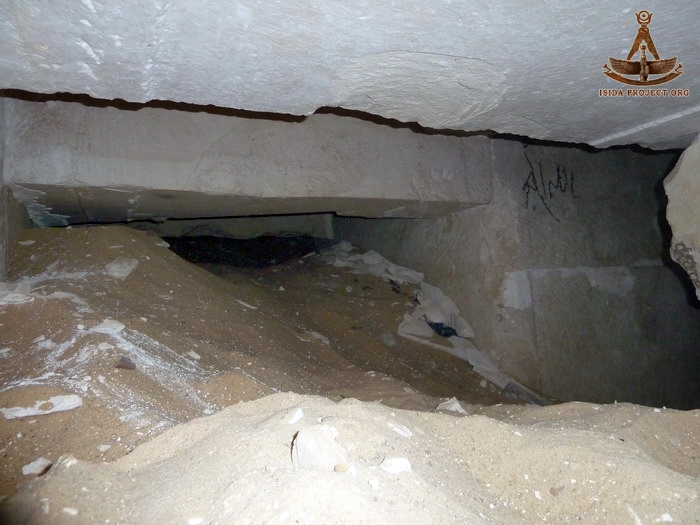
The Pyramid of Amenemhat II has been visited by our expeditions three times since 2011. Due to archaeological work, the interior of the Pyramid was accessible to varying degrees each time, as the sand that filled the Burial Chamber almost to the ceiling was moved by archaeologists along its entire perimeter - sometimes facilitating, sometimes hindering the ability to see and to capture the interior of the structure that once towered upon the Dahshur desert. The most illustrative photographs were taken by our team in 2011. In this report, we present the most successful photographs, taken during our expeditions, which give the most complete idea of the interior architecture of the Pyramid. General panorama from the top of the send hill near the Pyramid of Amenemhat II.
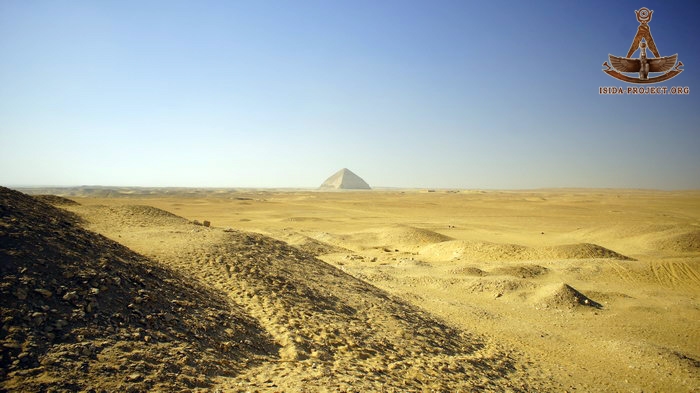
View of the Pyramids of Dahshur from the Pyramid of Amenemhat II.
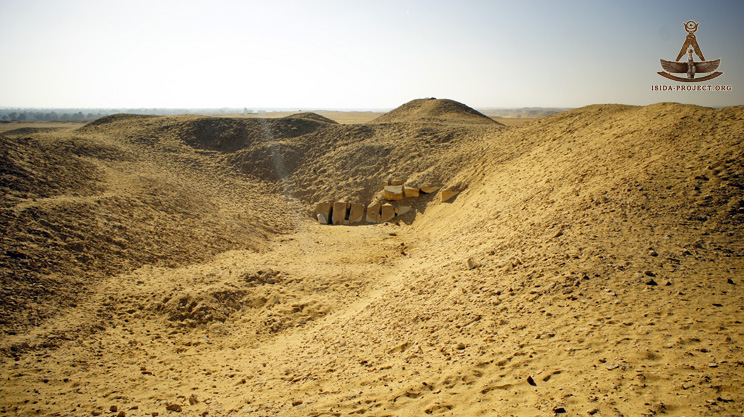
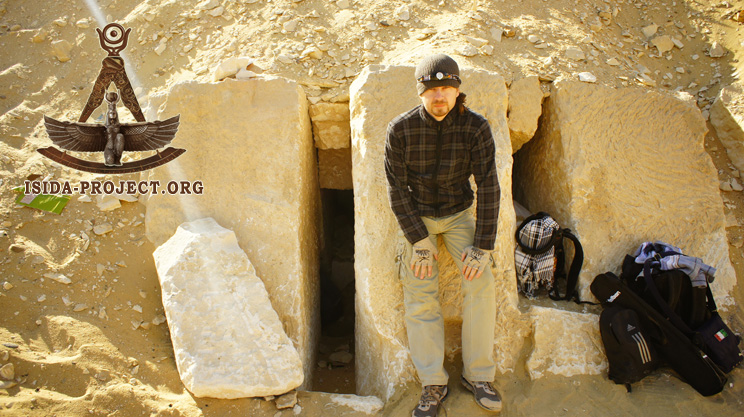
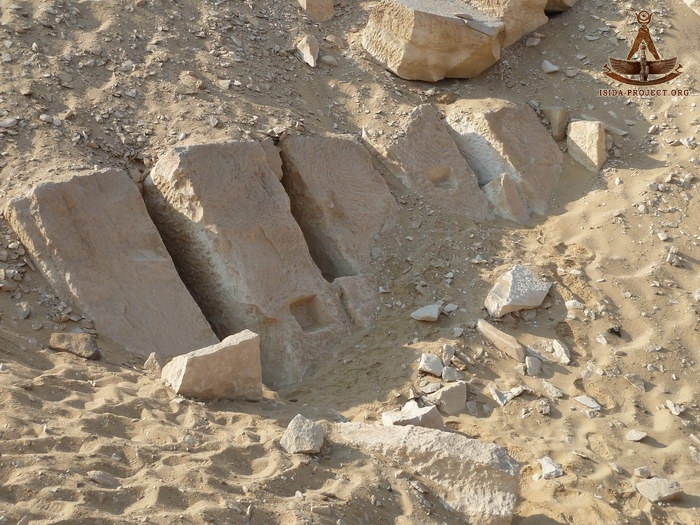
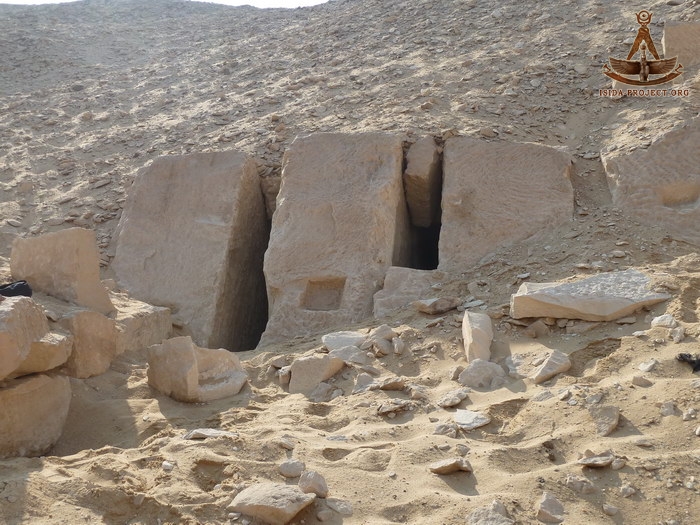
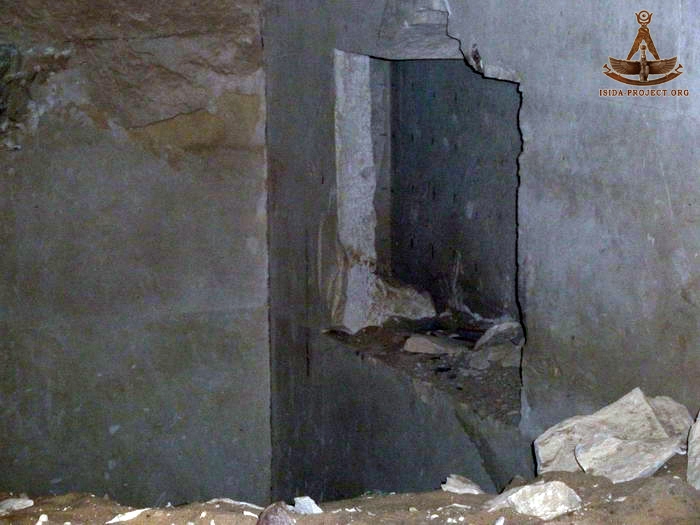
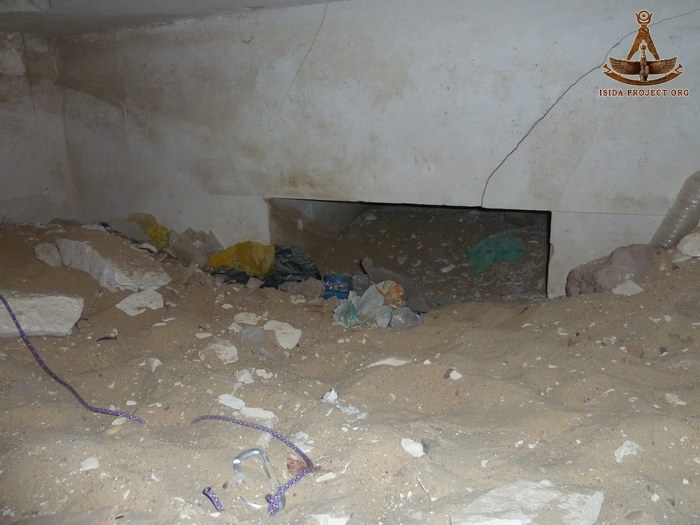
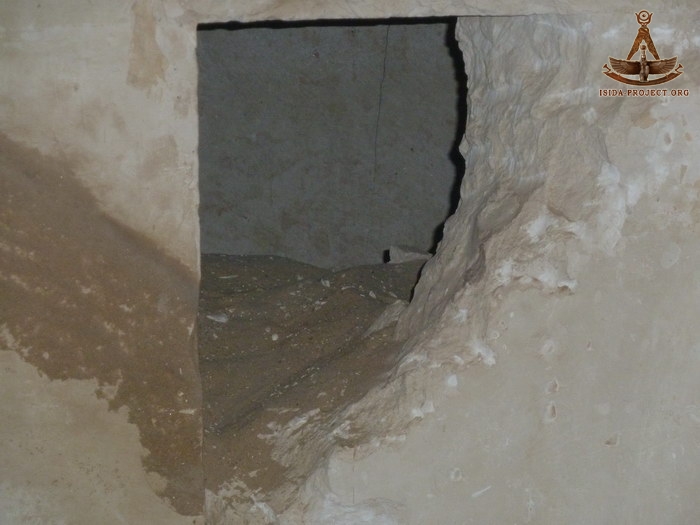
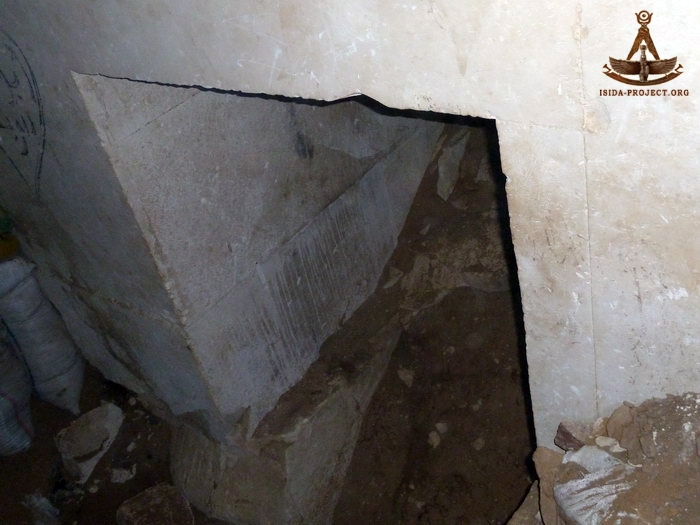
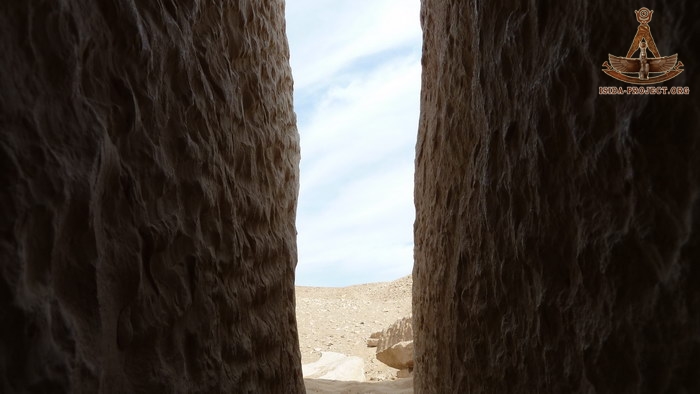
The gable vault with a missing block of 28 cm width is the only "passage" into the interior of the Pyramid.
Welcome to the interior of the Pyramid of Amenemhat II.
3D panorama of the Burial Chamber of Amenemhat II.
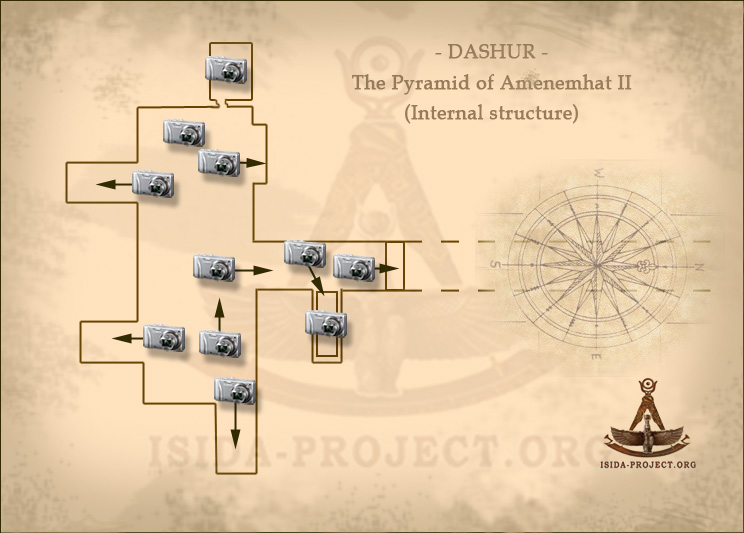
For navigation inside the interior of the Pyramid, use the interactive diagram.
Upper Chamber.
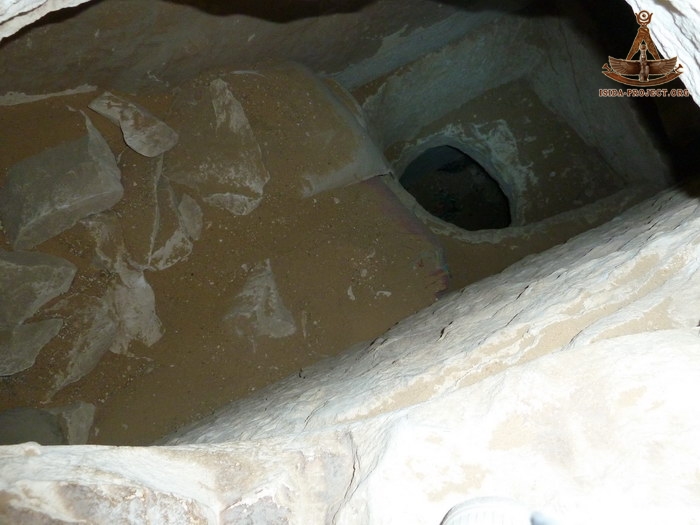
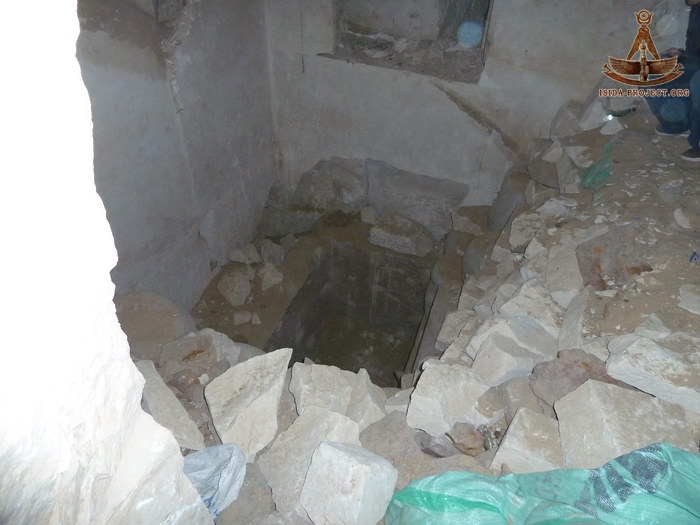
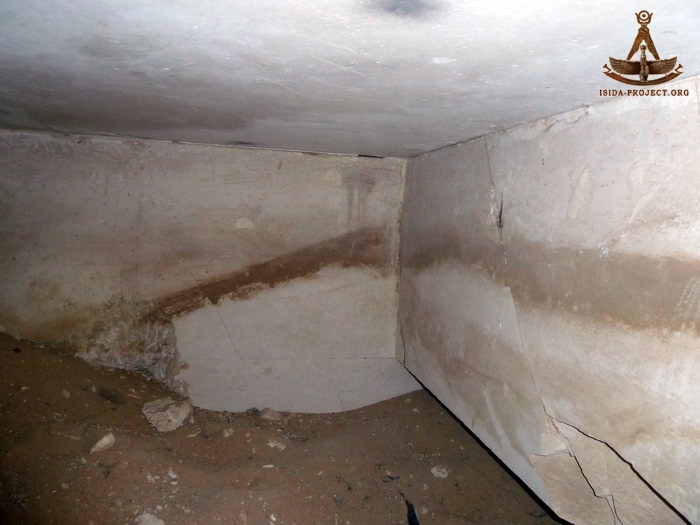
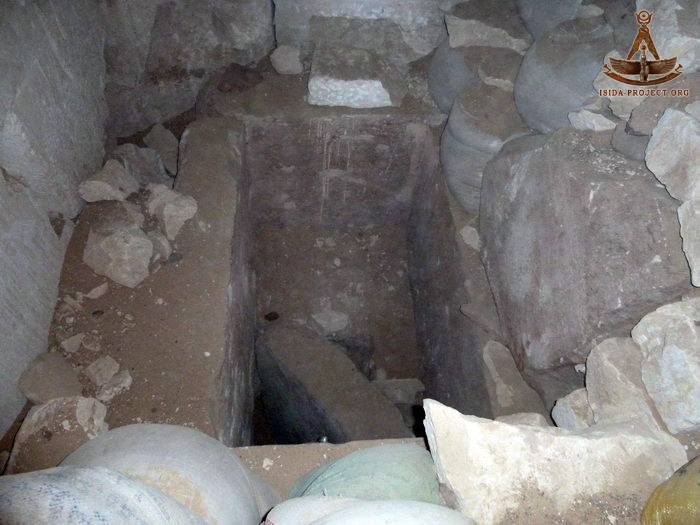
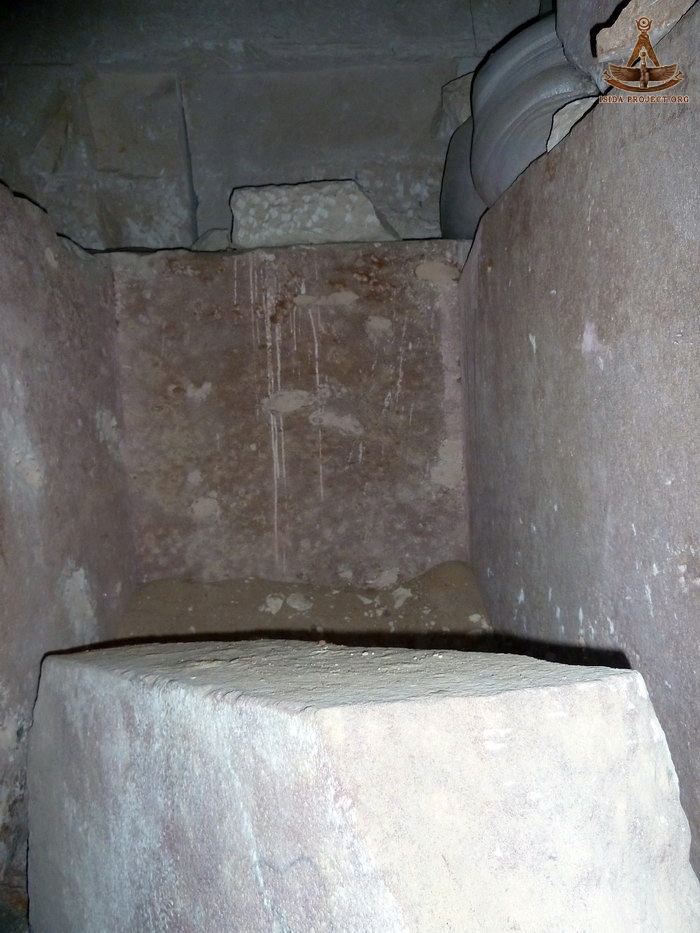
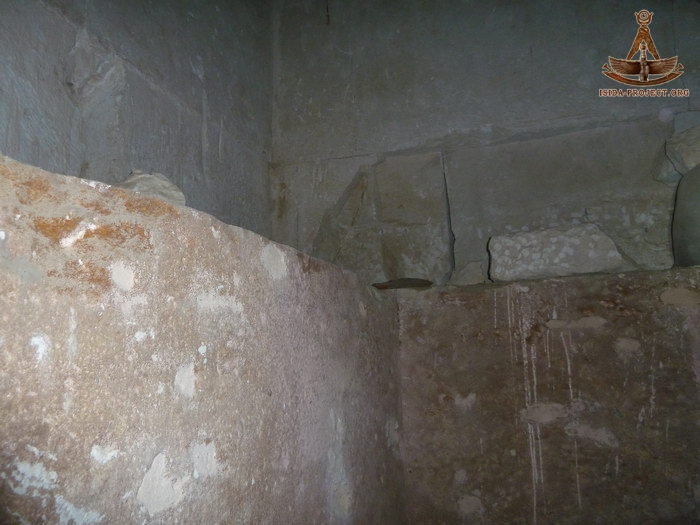
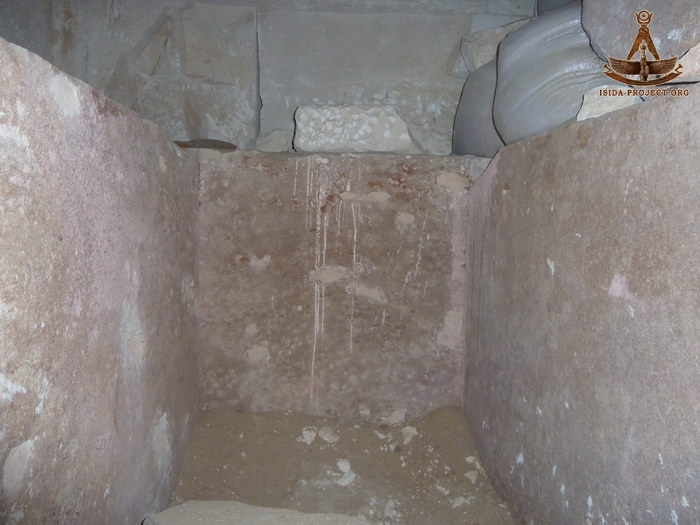
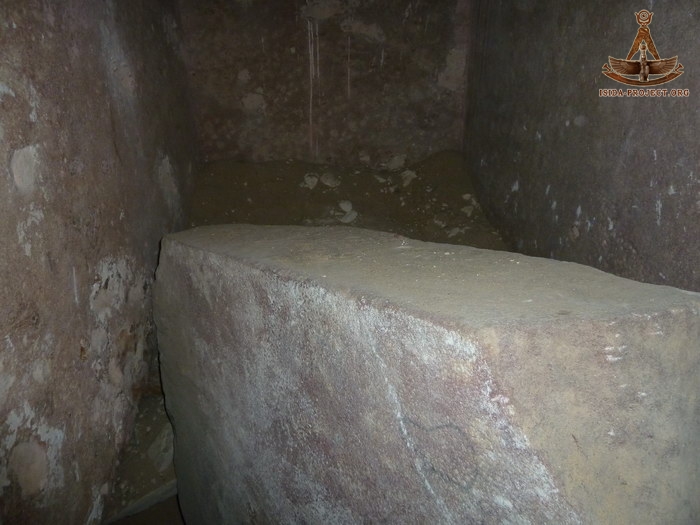
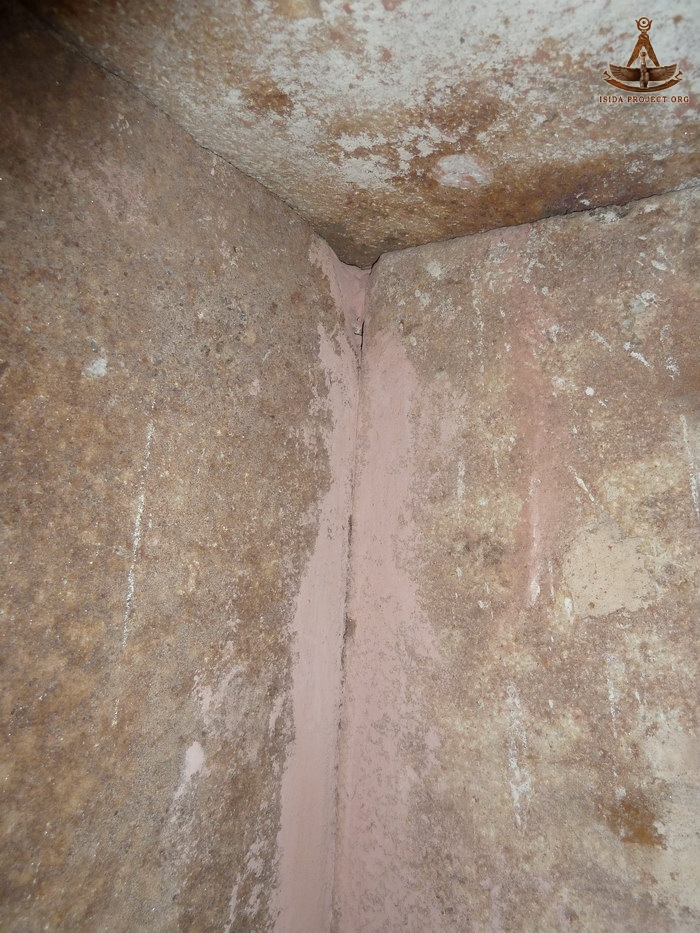
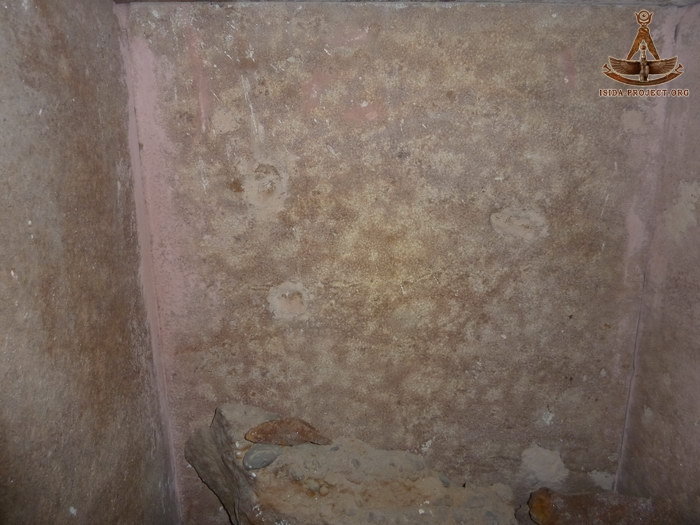
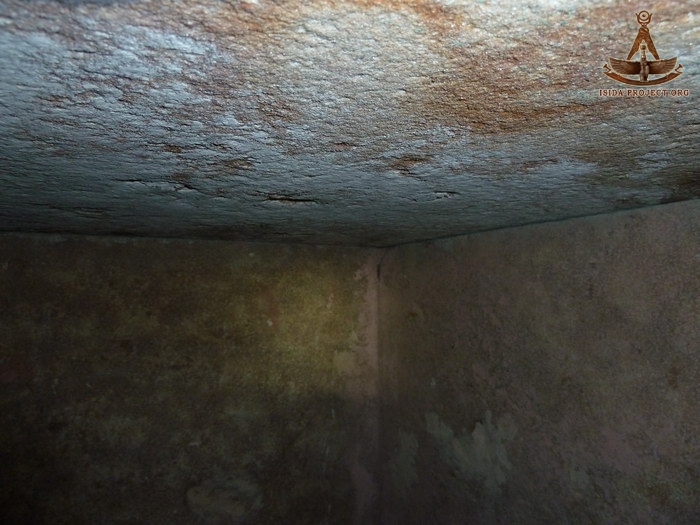
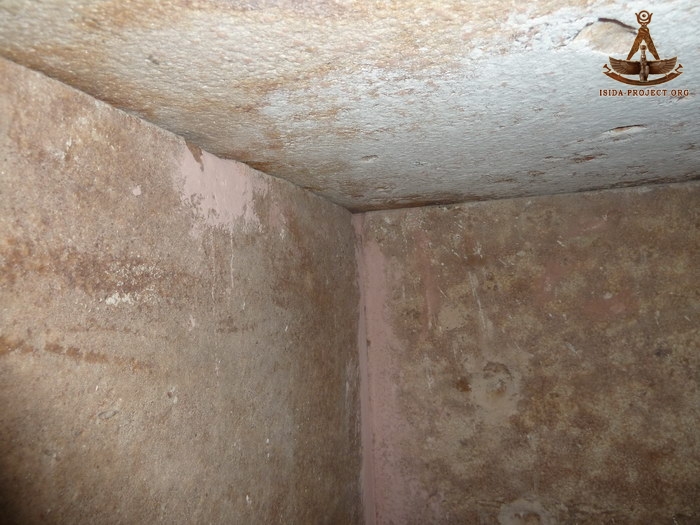
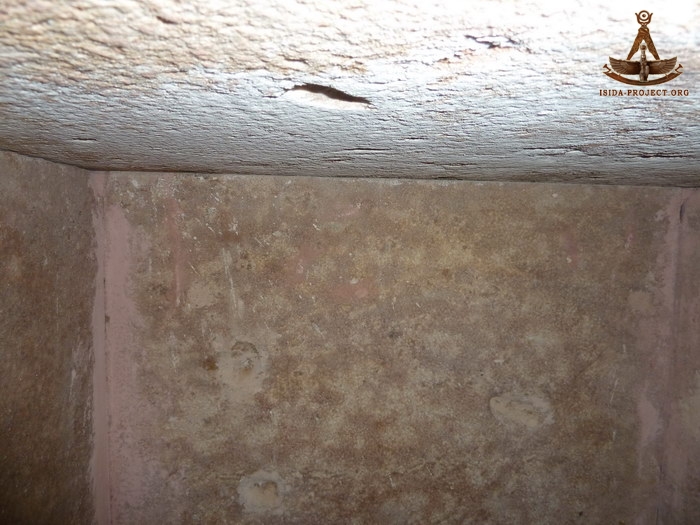
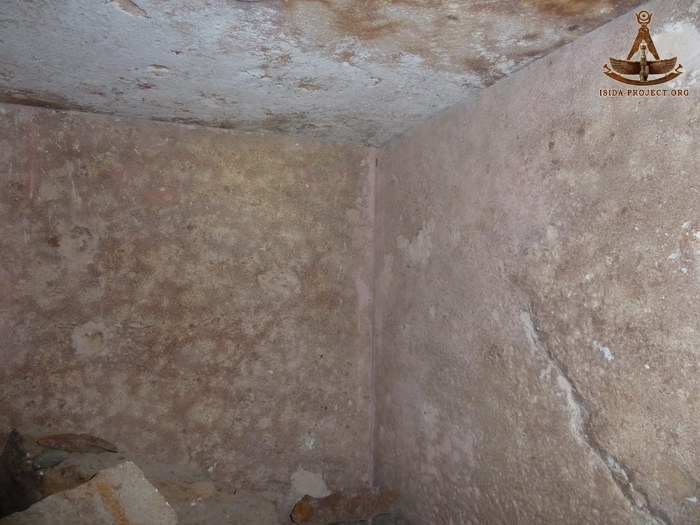
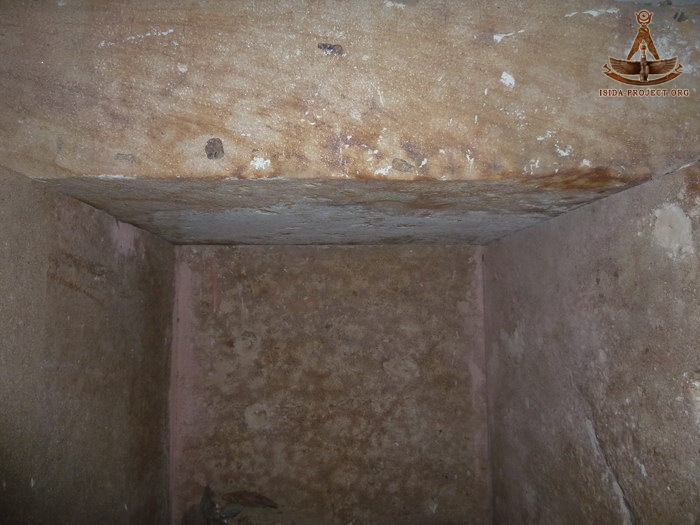
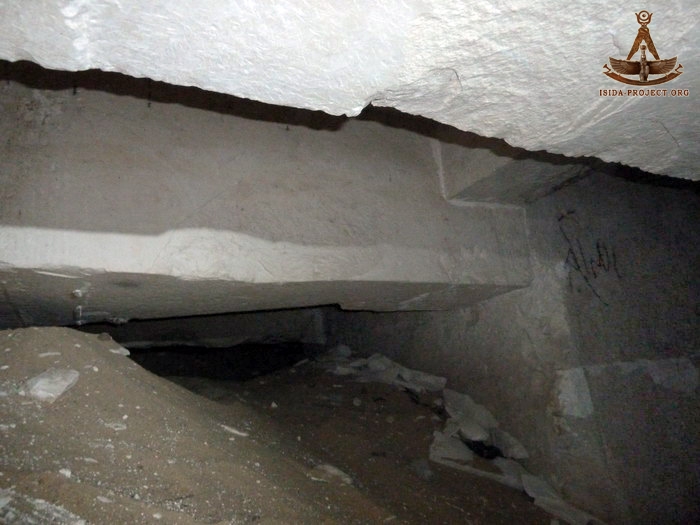
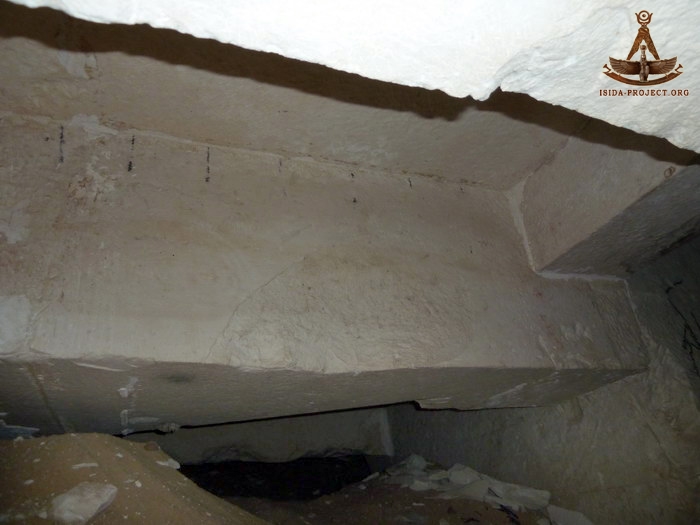
Sarcofagus The sarcophagus made of red quartzite, embedded into the floor of the Burial Chamber, is not a monolithic piece, unlike sarcophagi found in a number of other Ancient Egyptian Pyramids. It consists of four vertical blocks forming the walls and one horizontal block forming the bottom. The horizontal block is completely broken. The joints of the vertical blocks are fastened with pink mortar.
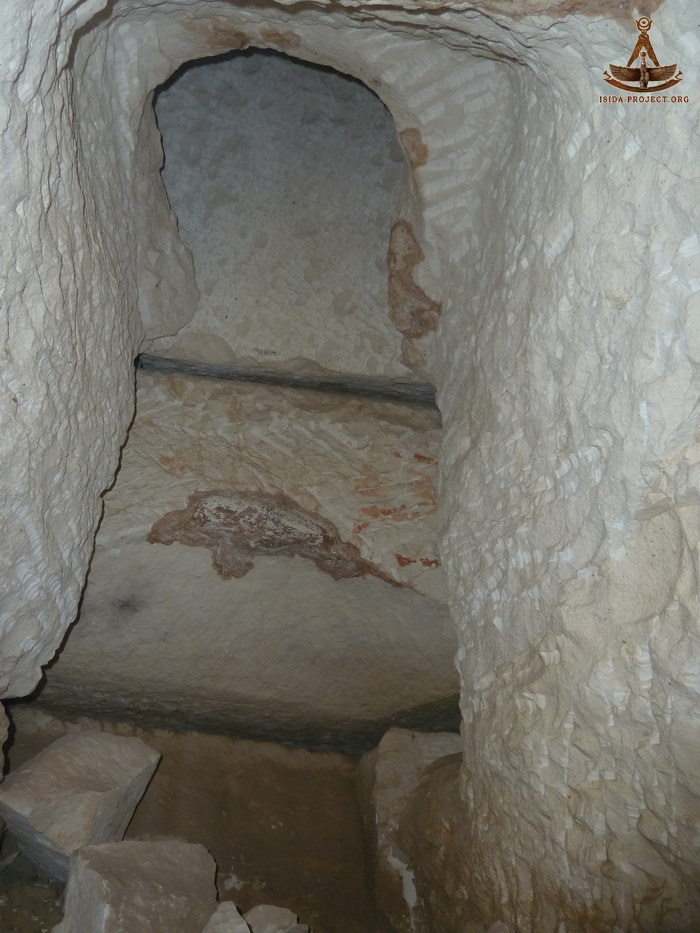
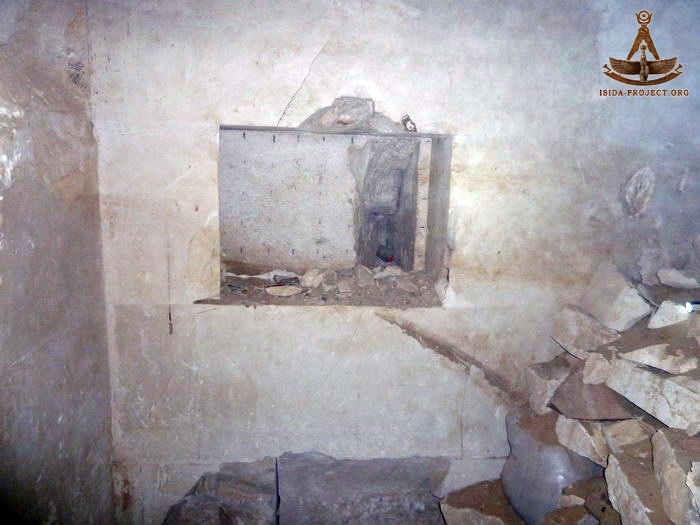
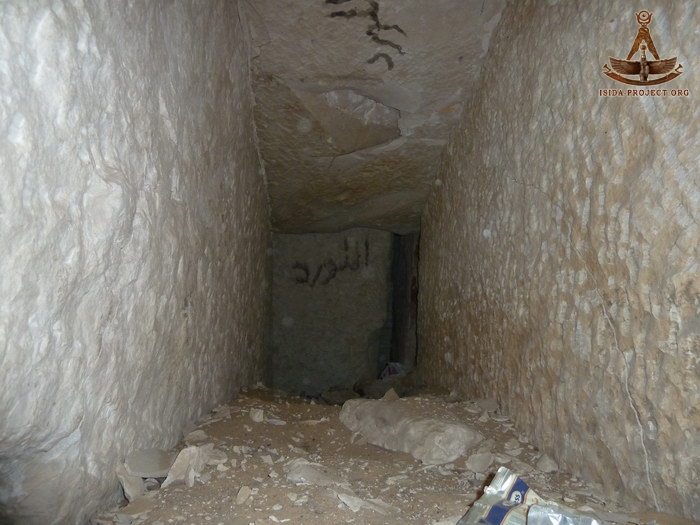
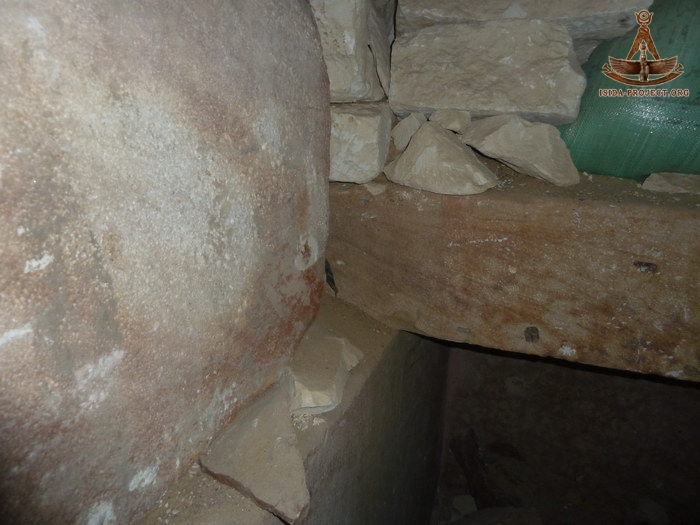
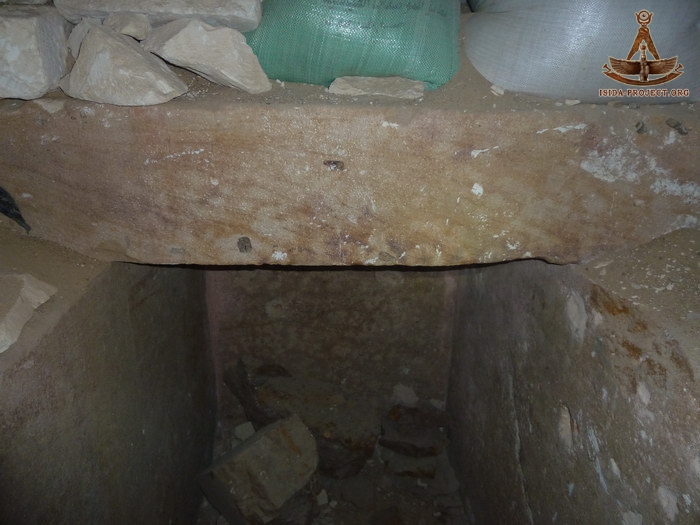
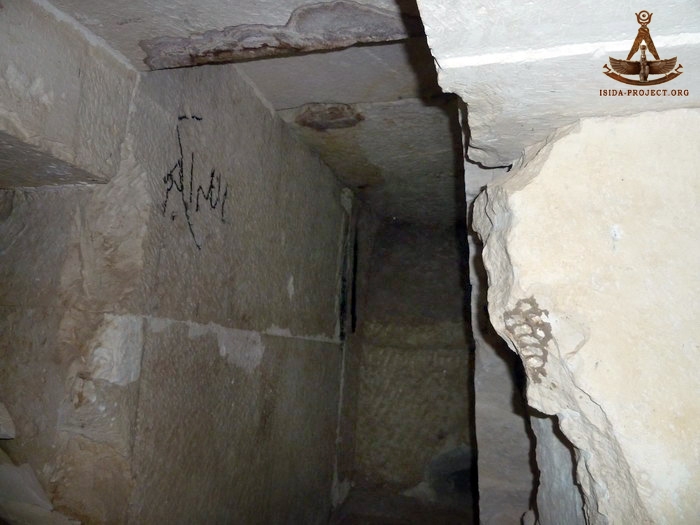
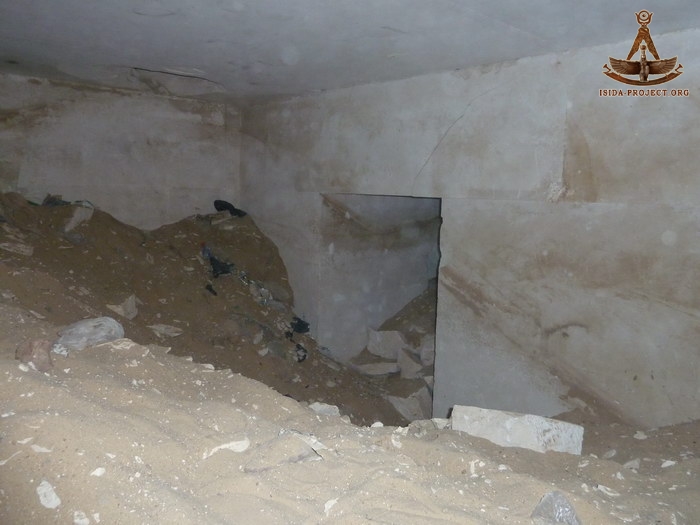
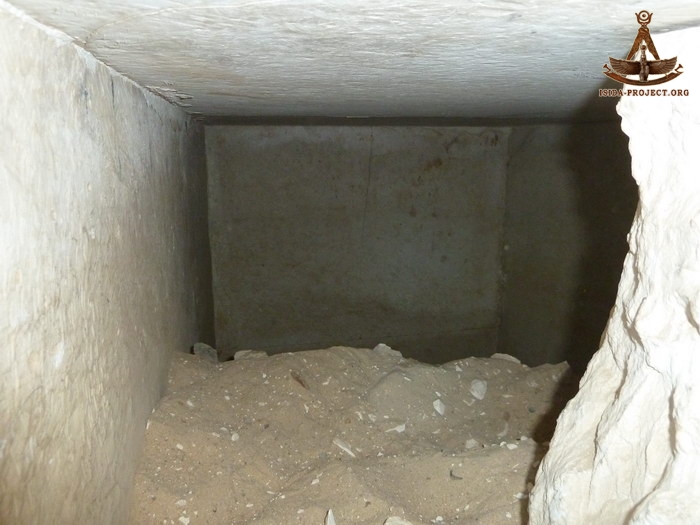
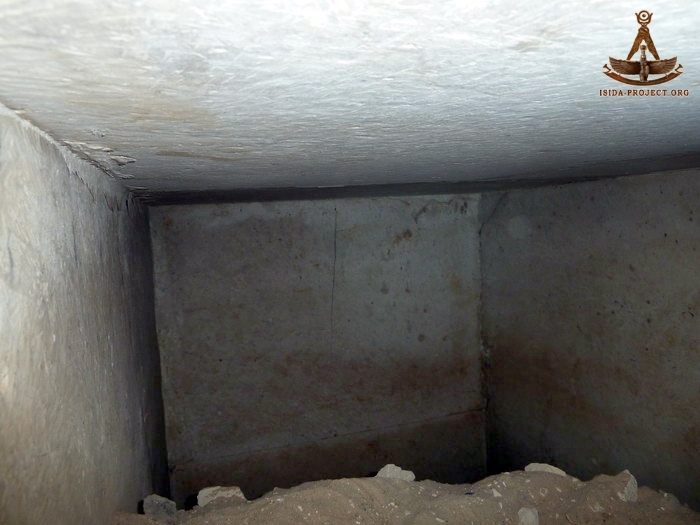
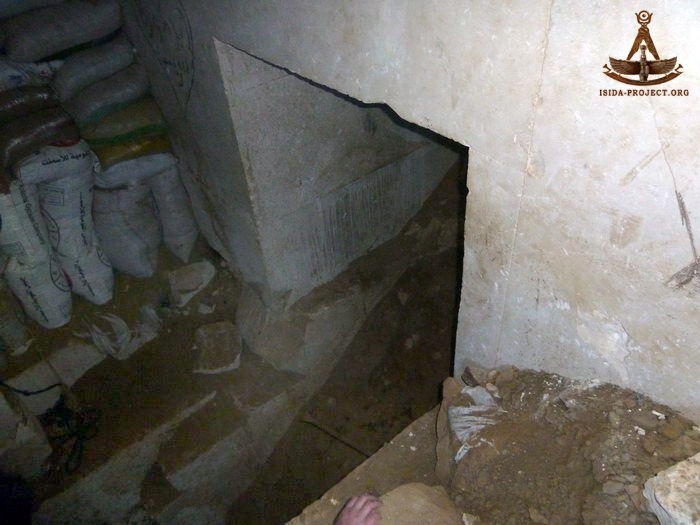
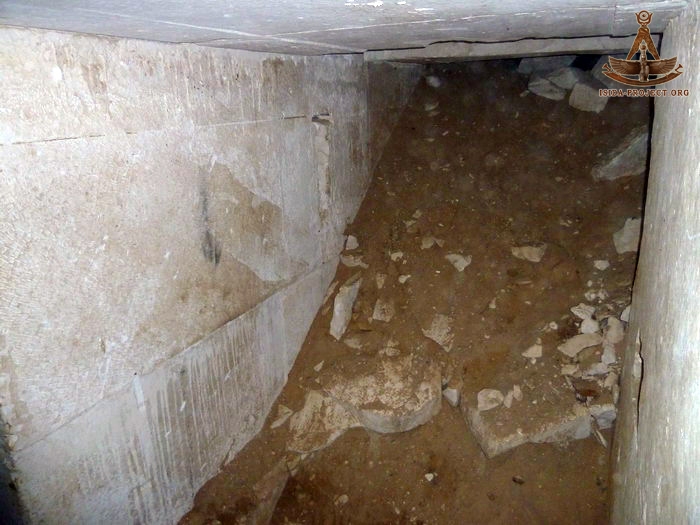
Descending Passage and niches for vertical portcullises The far niche is empty. It is difficult to determine now where the portcullis it was housing. It might be buried under the sand, which almost completely filled all the internal spaces of the Pyramid.
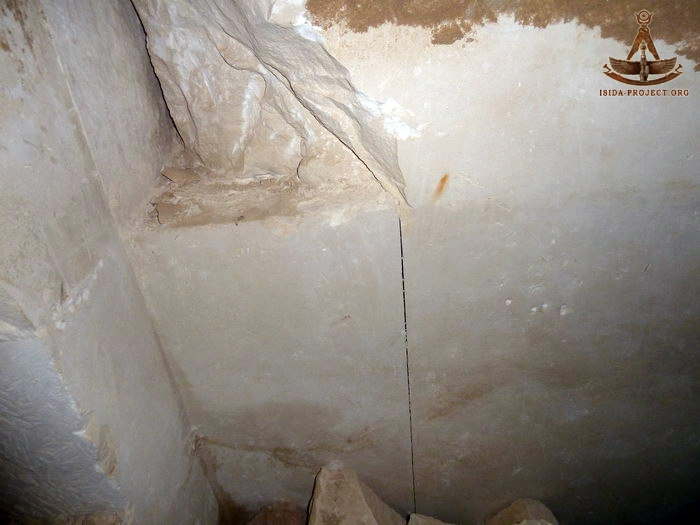
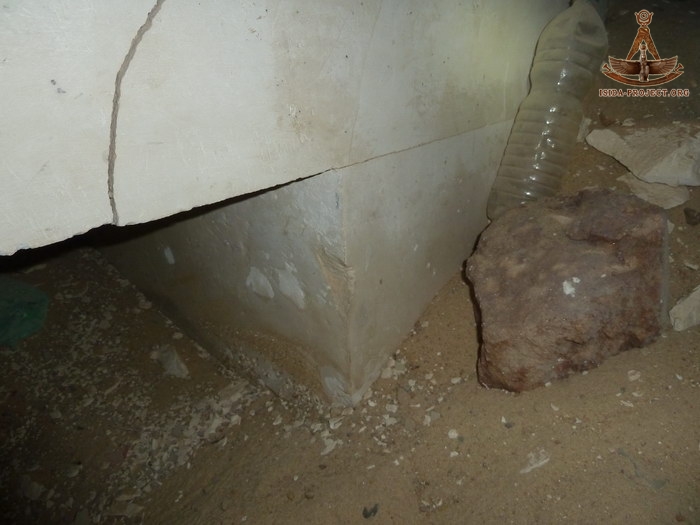
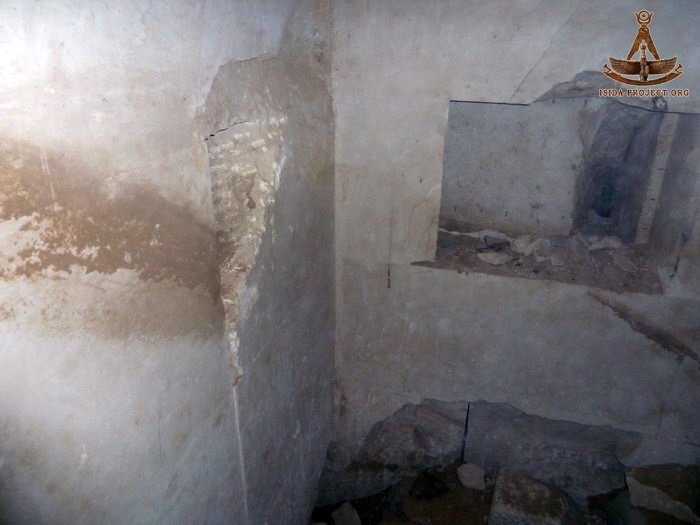
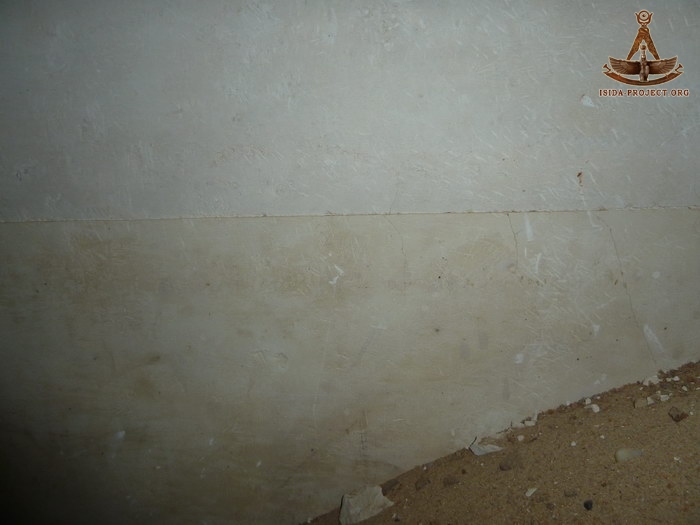
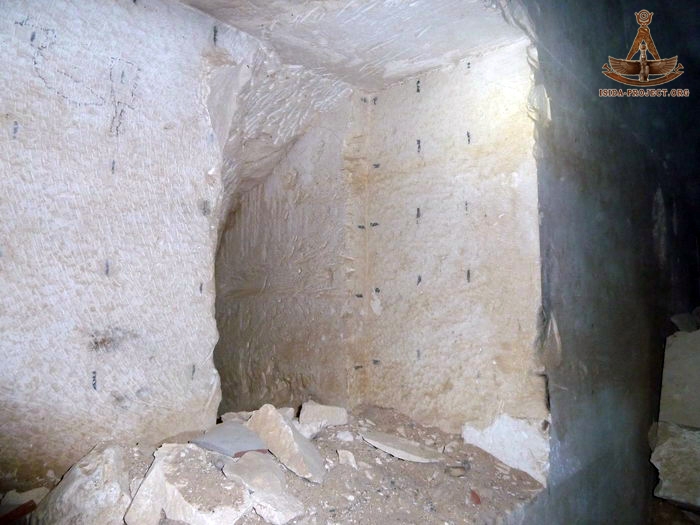
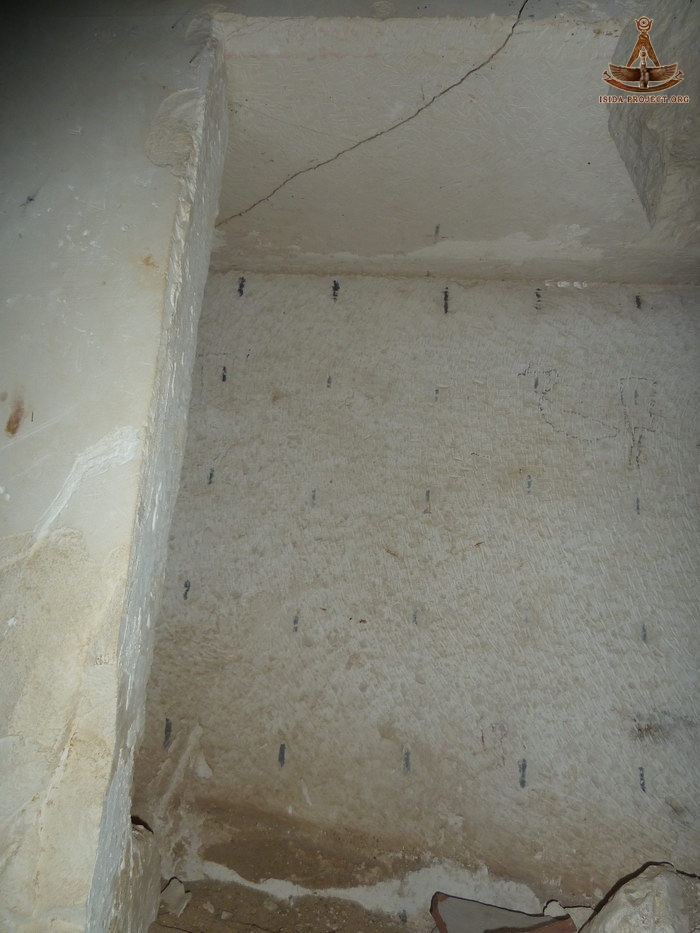
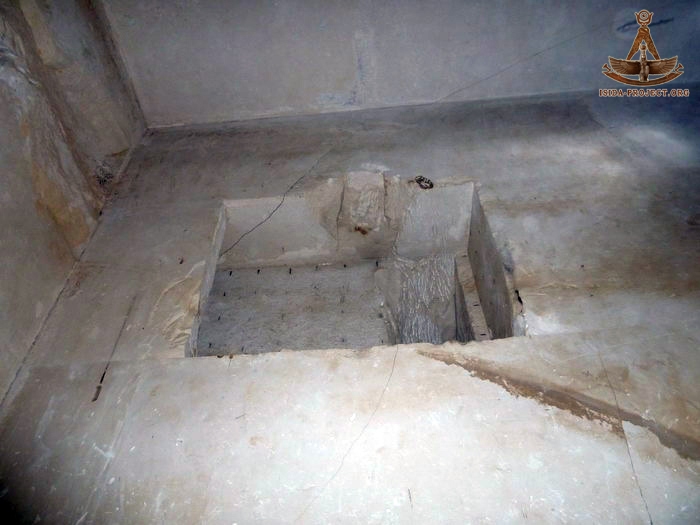
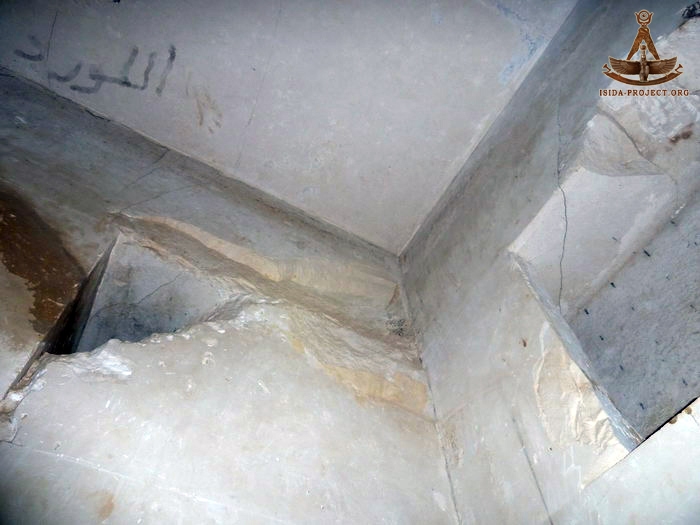
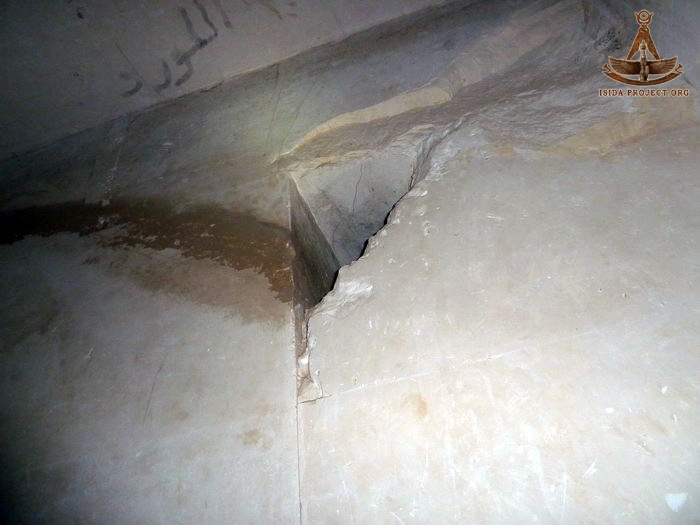
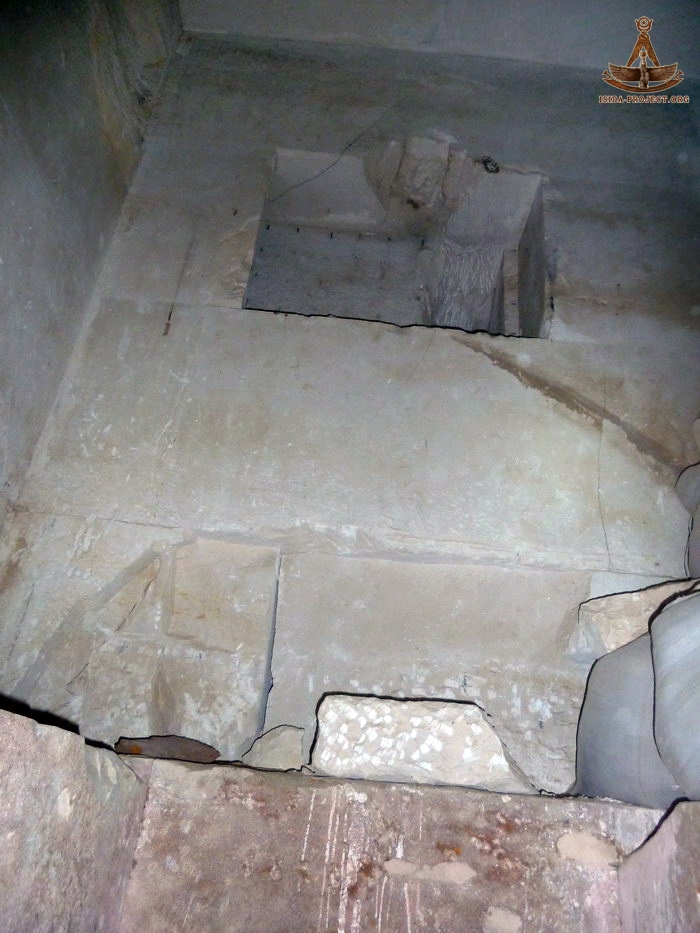
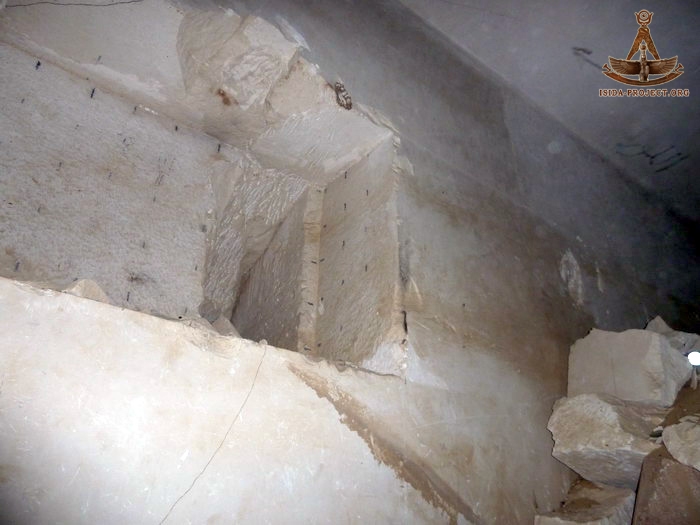
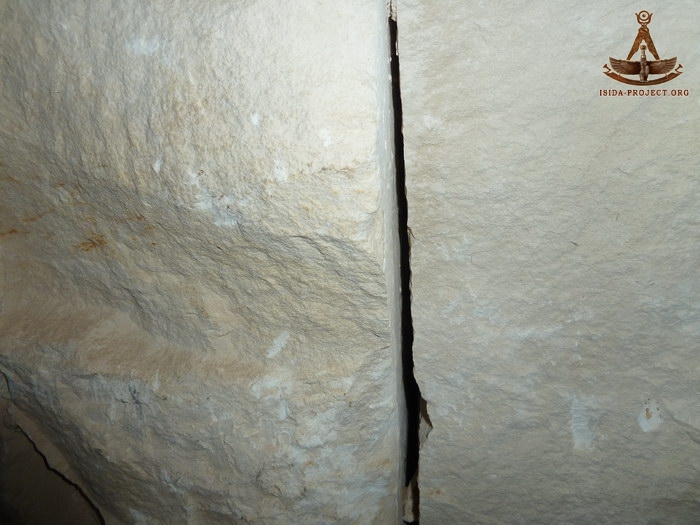
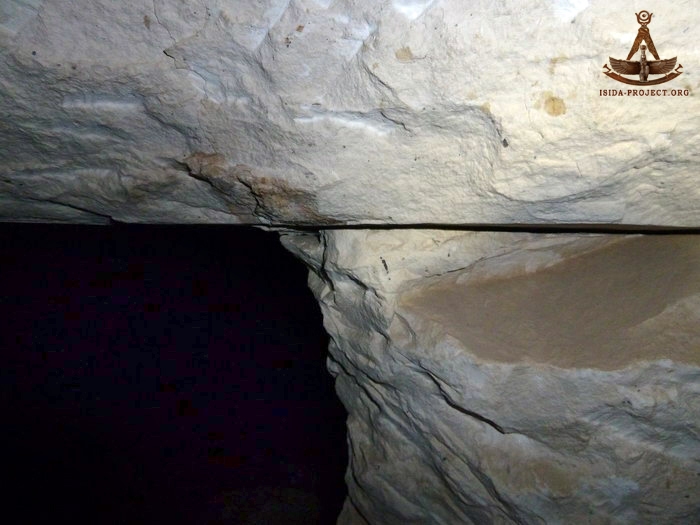
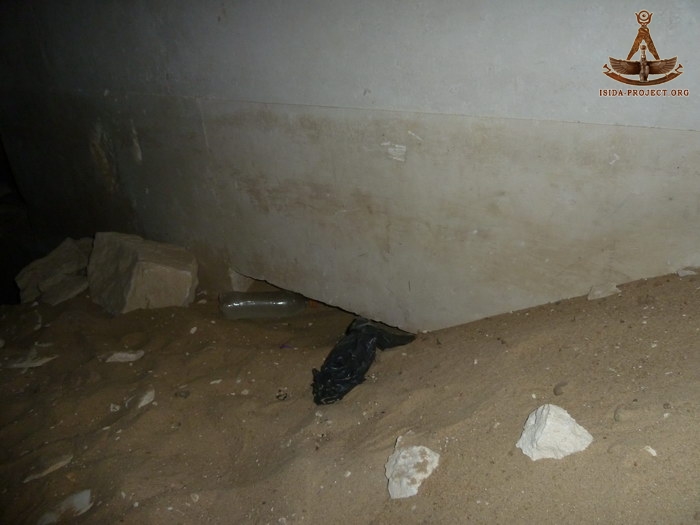
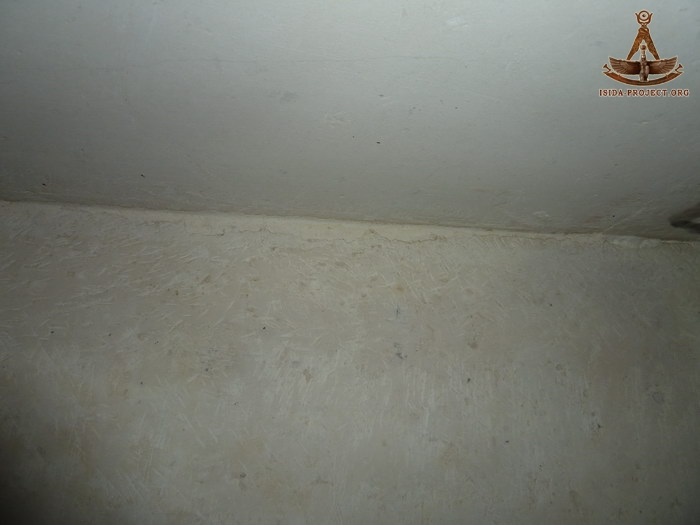
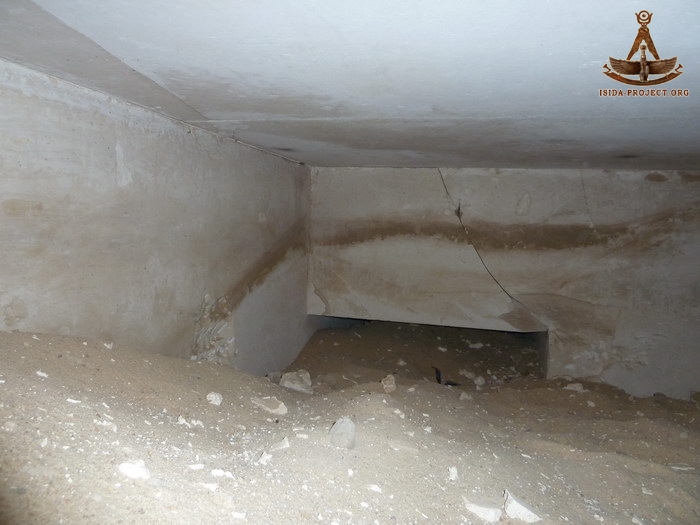
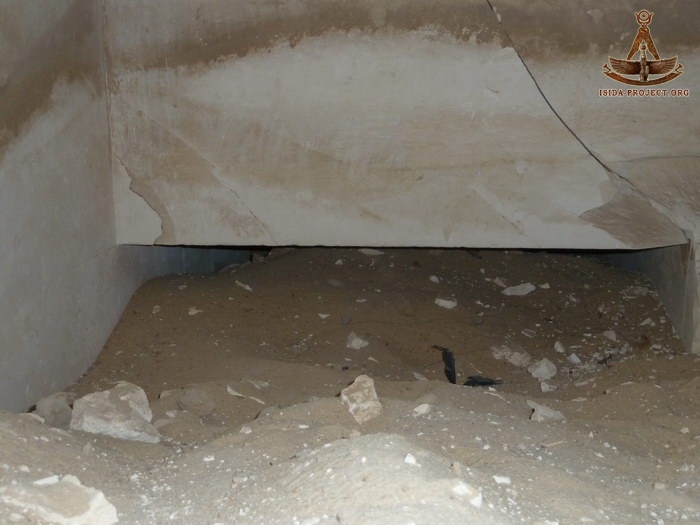
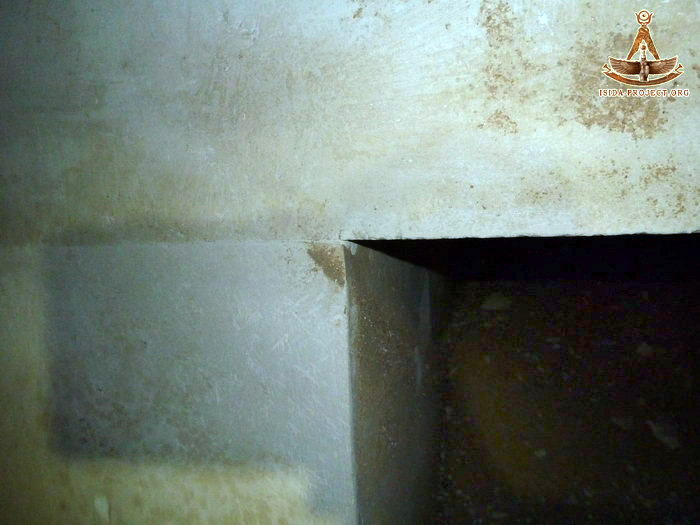
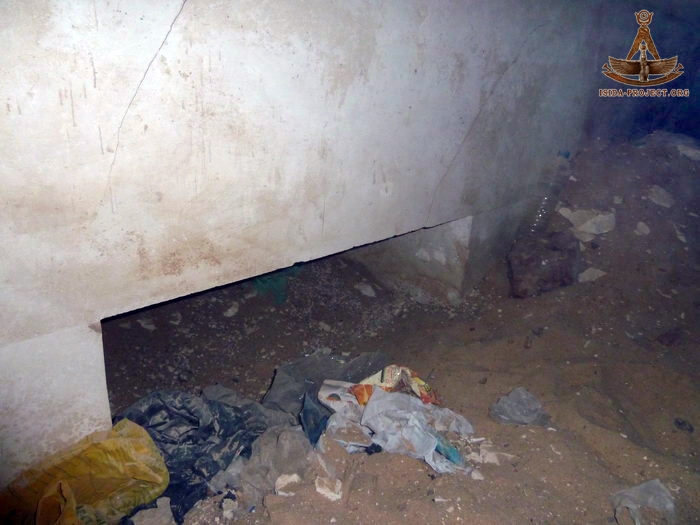
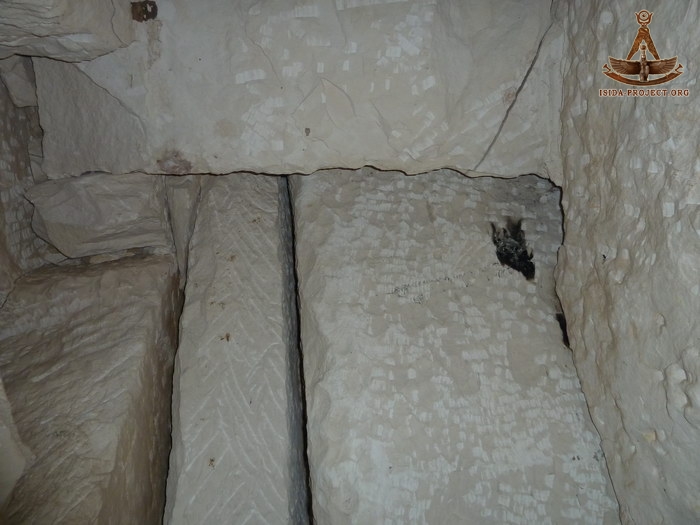
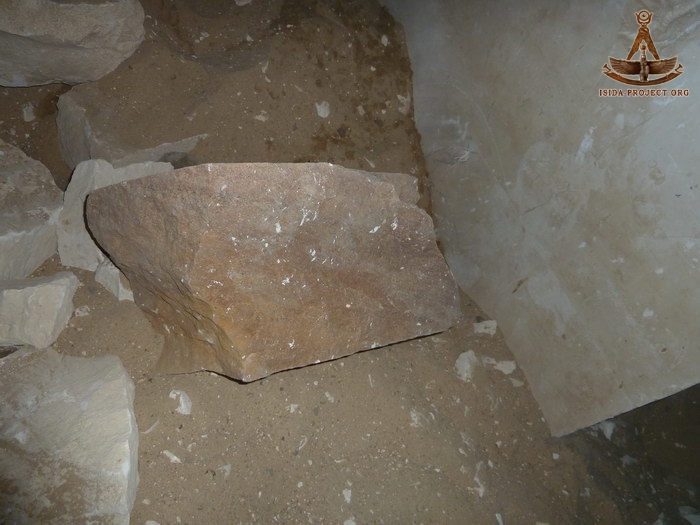
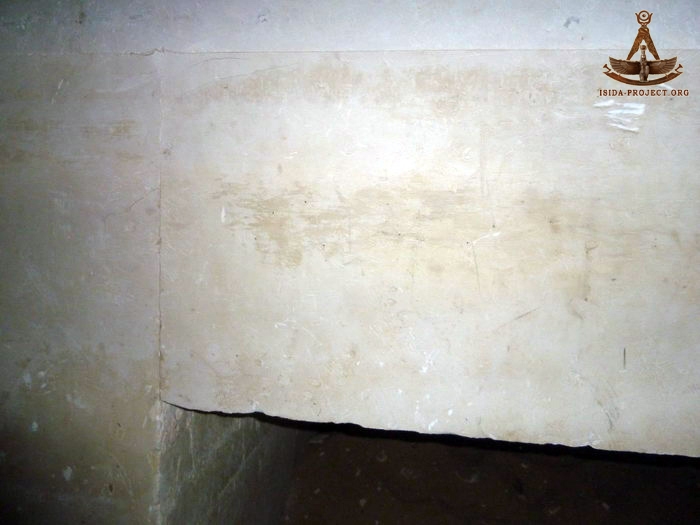
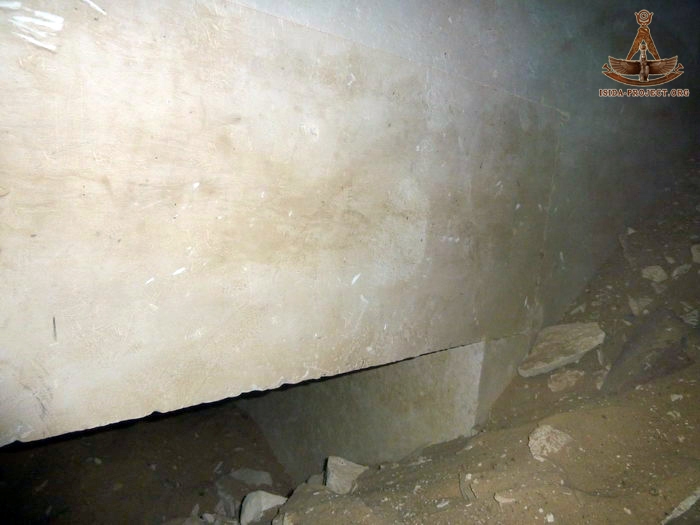
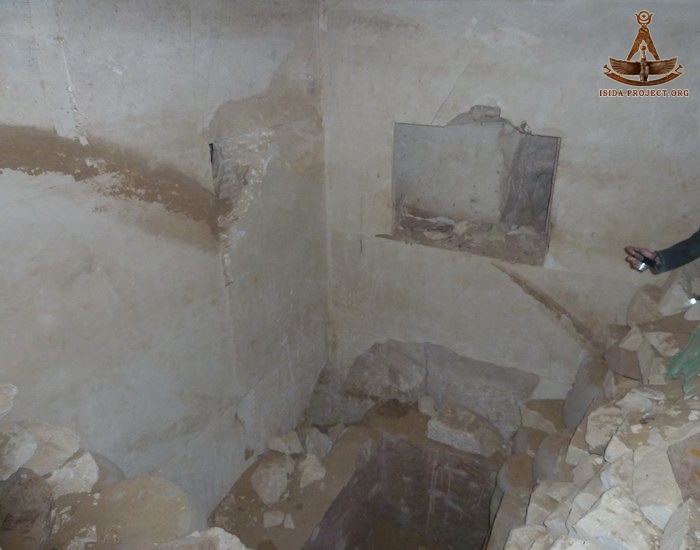
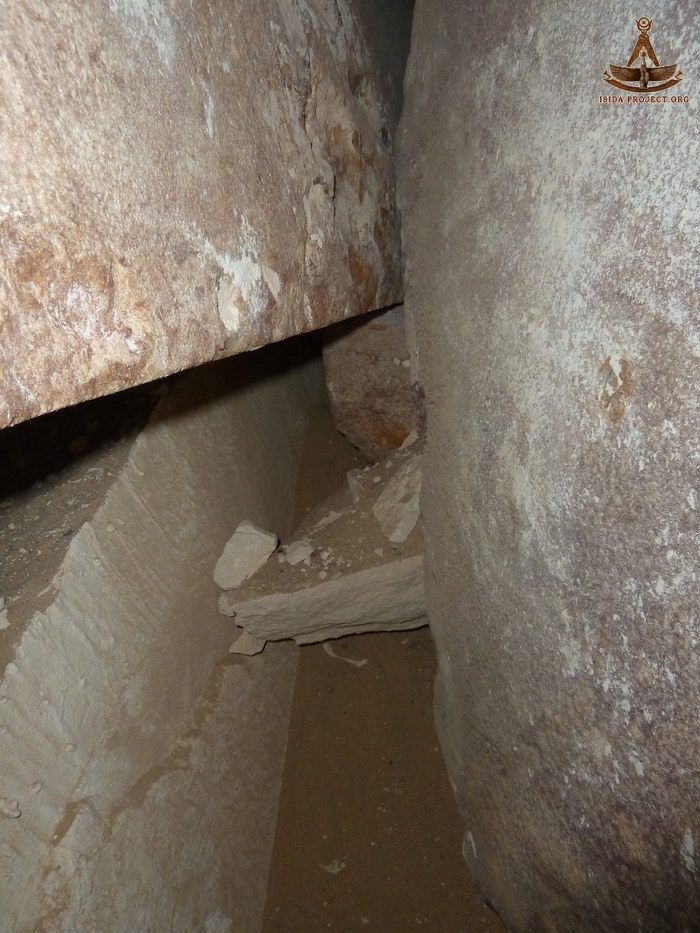
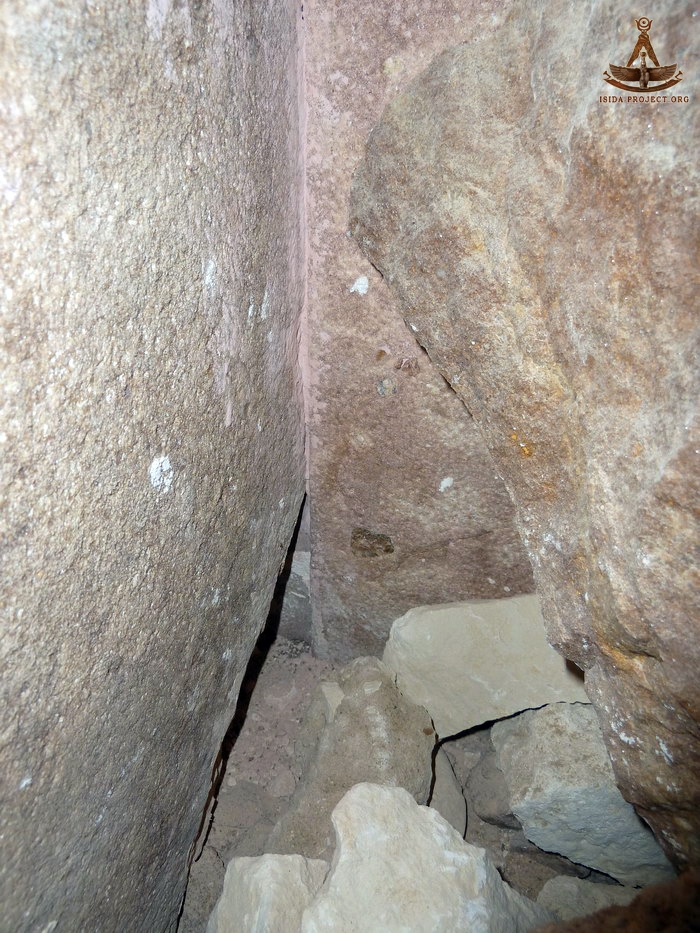
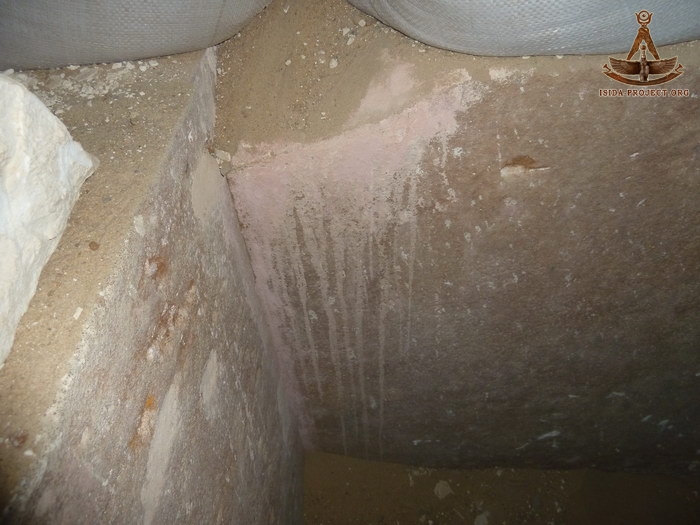
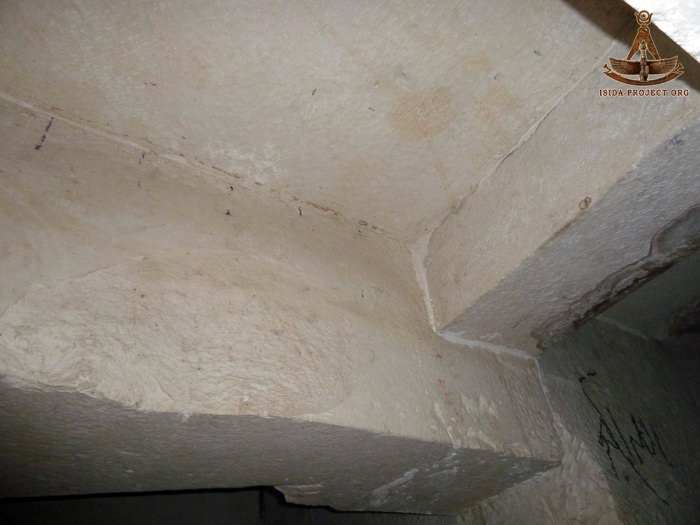
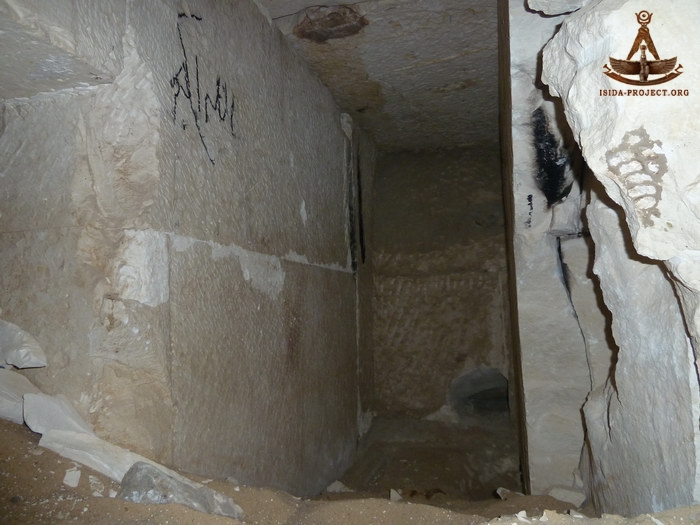
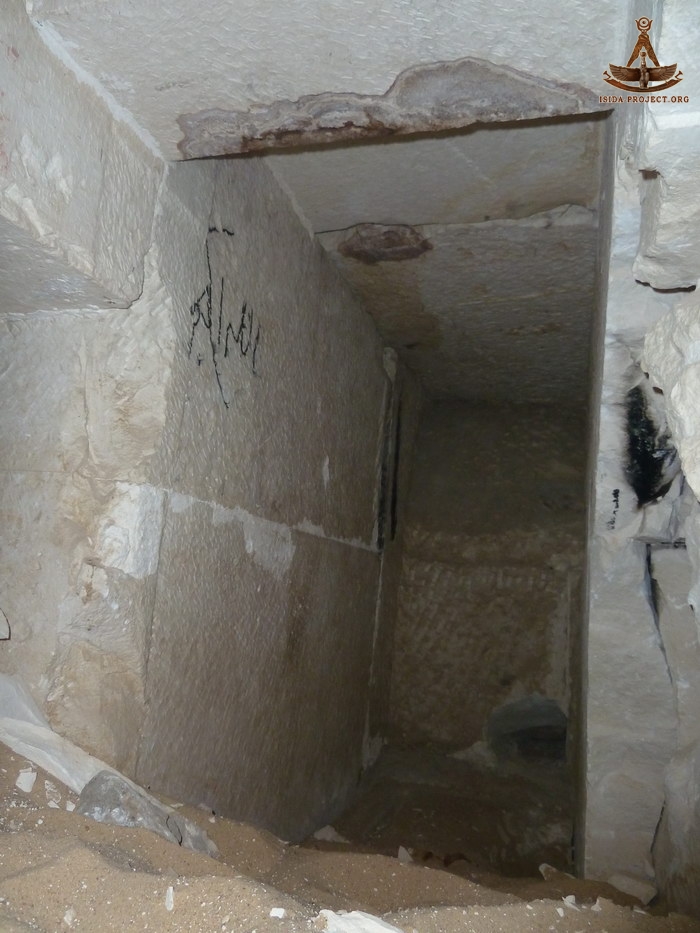
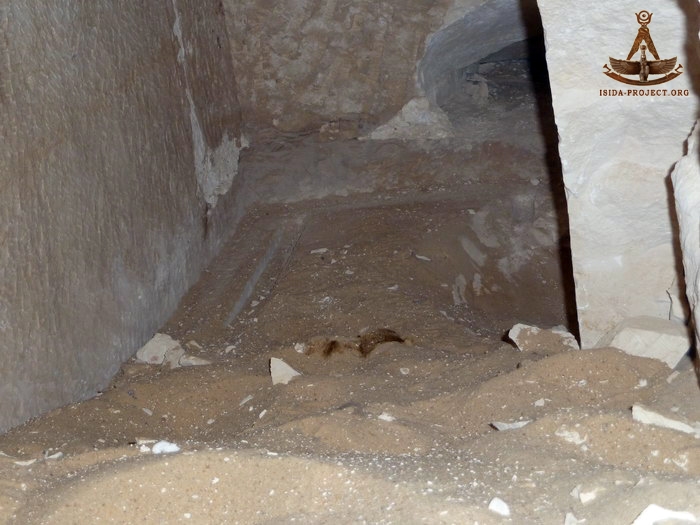
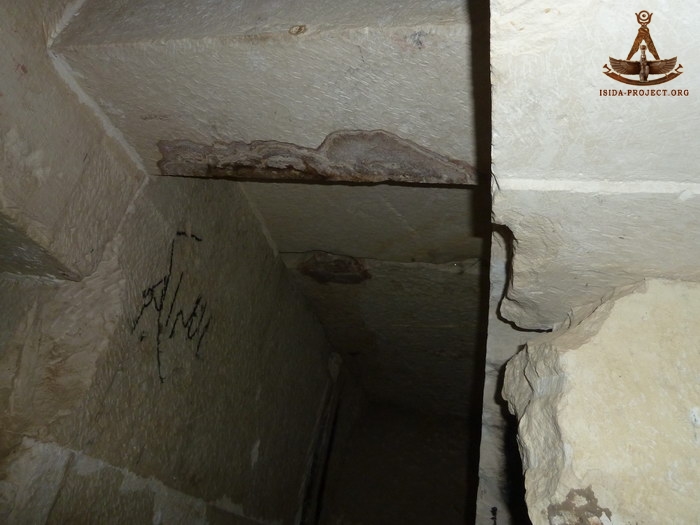
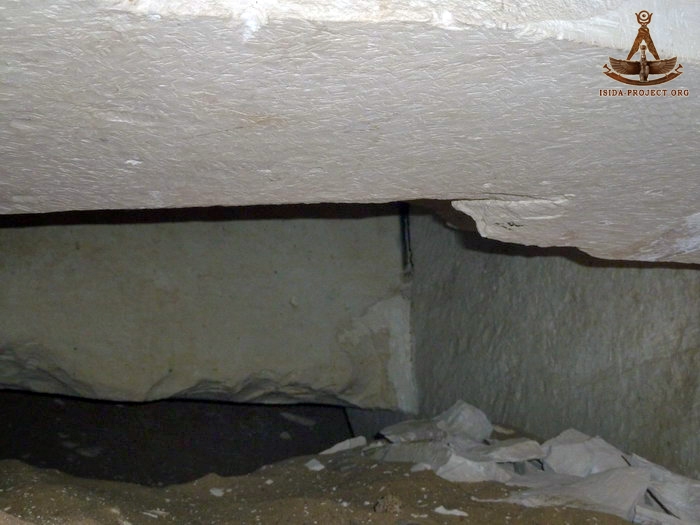
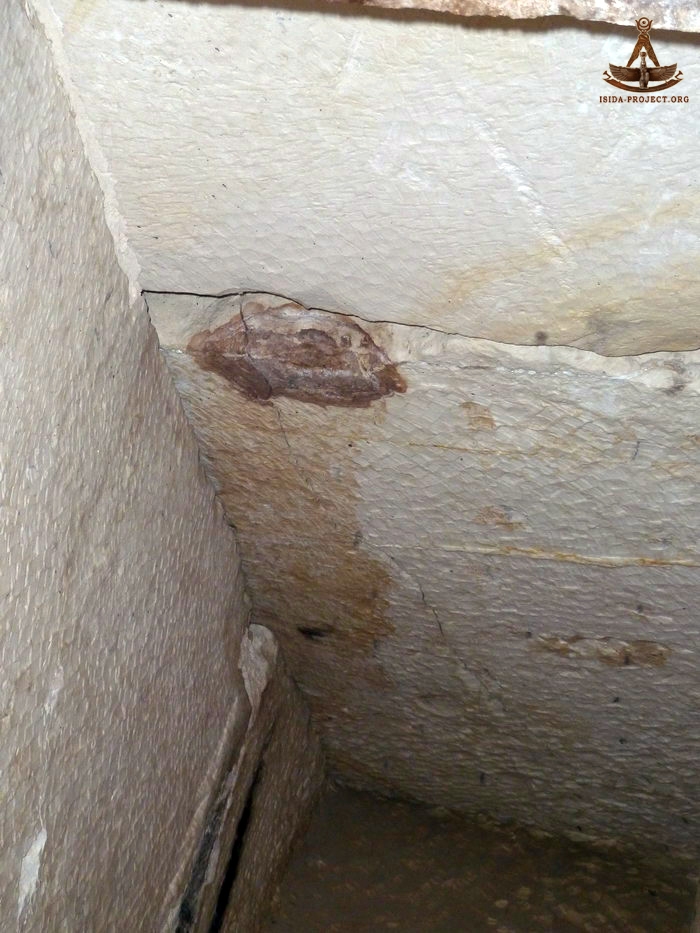
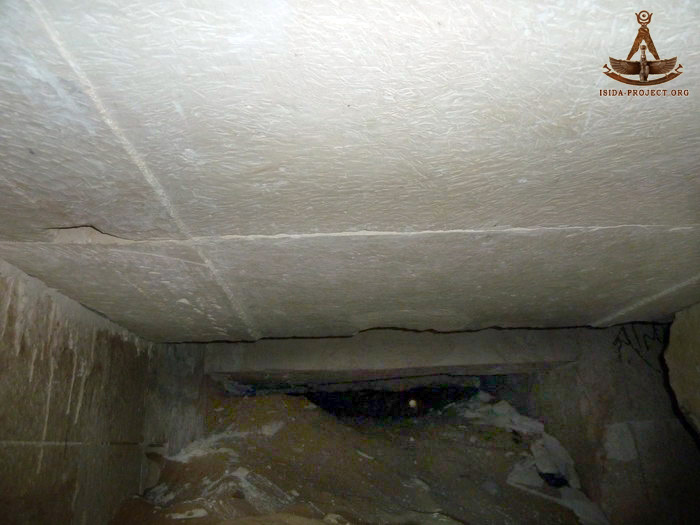
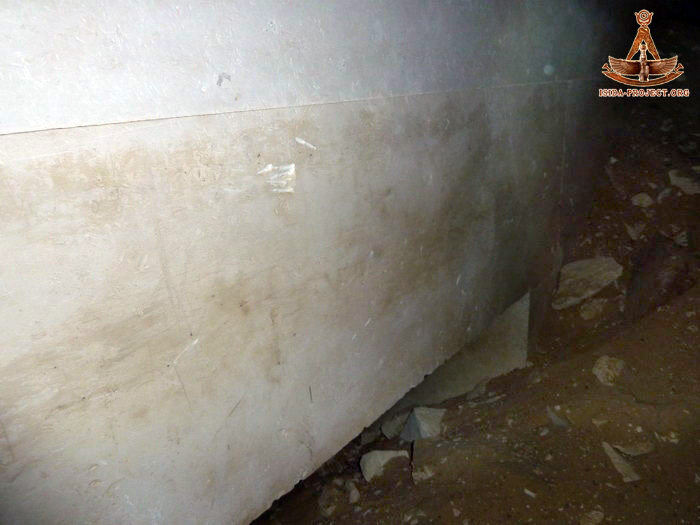
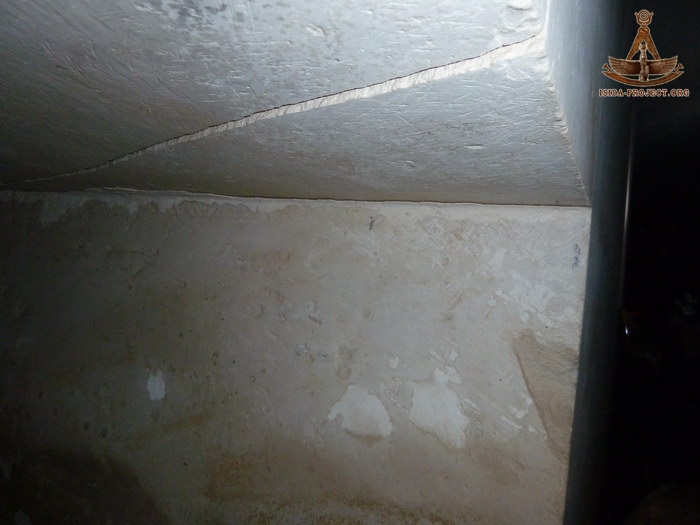
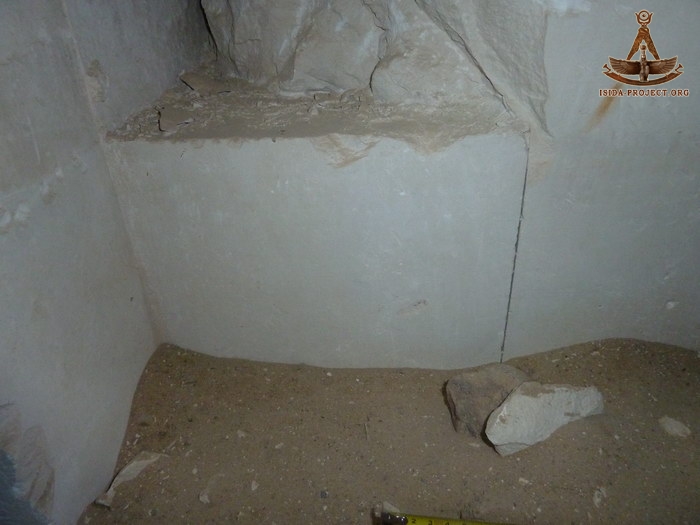
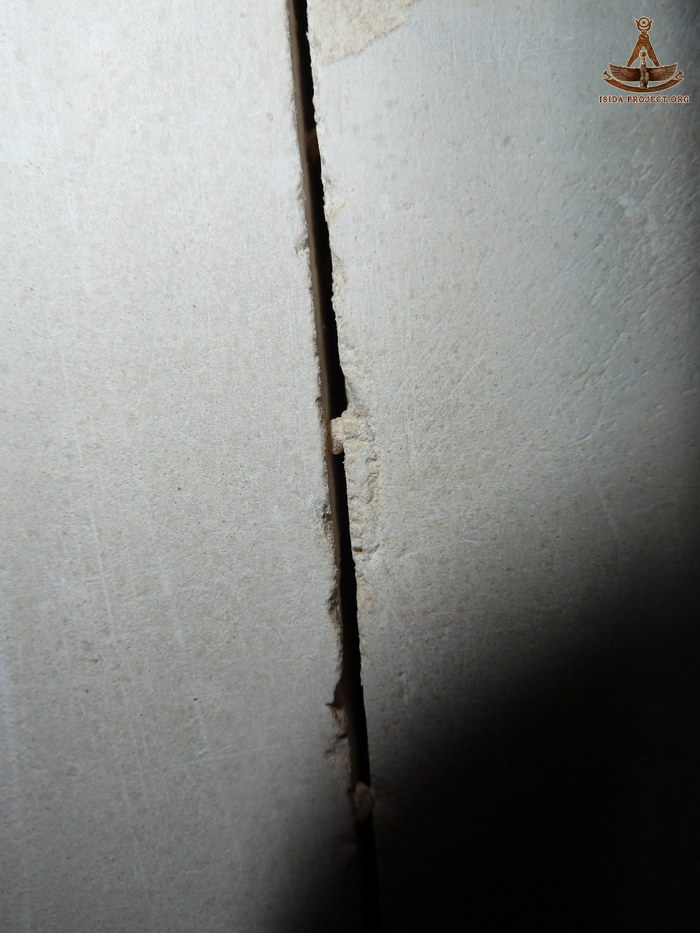
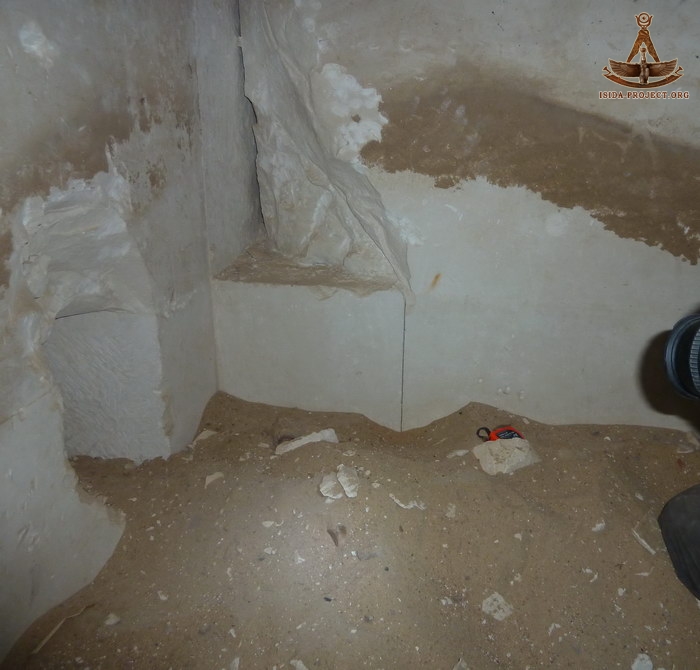
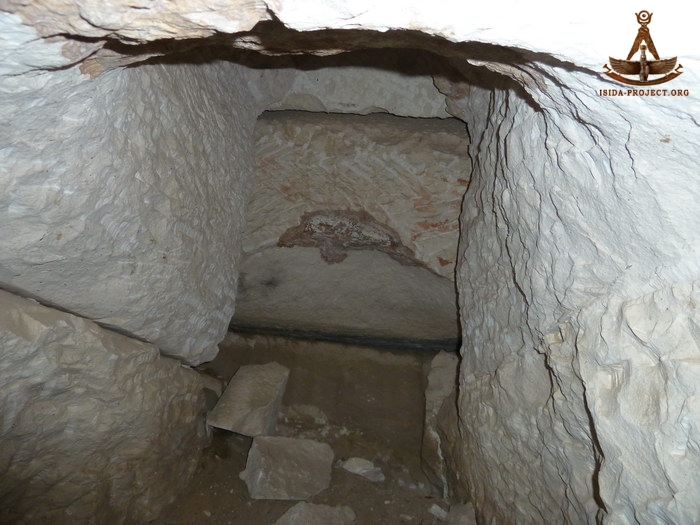
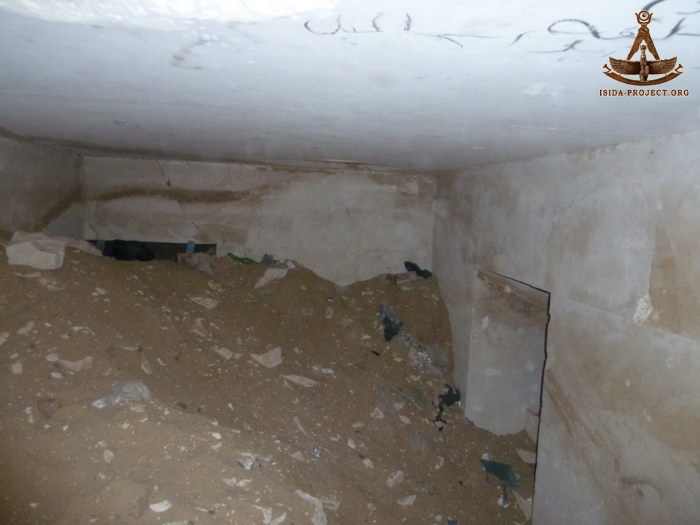
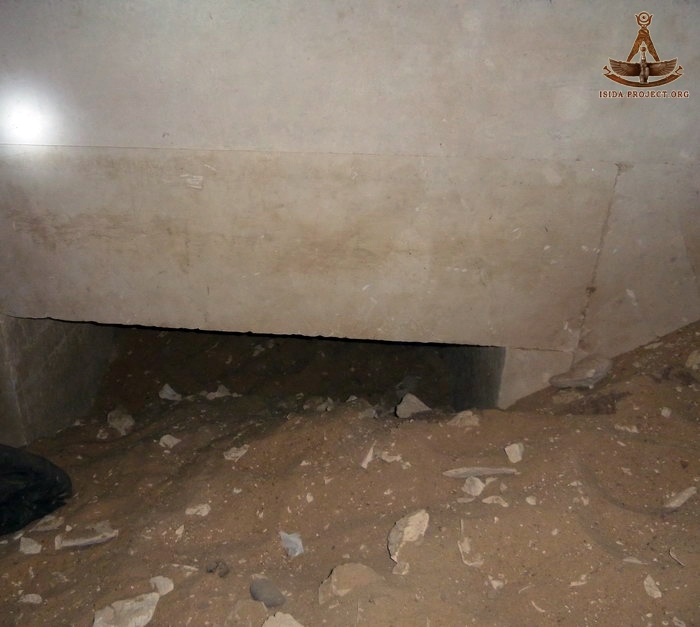
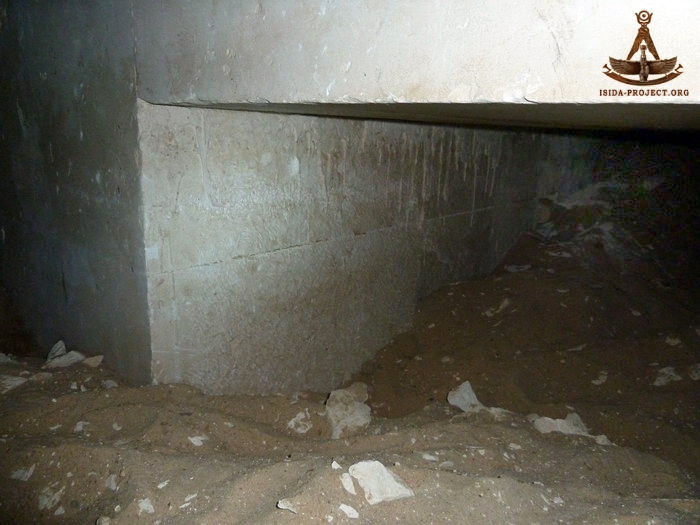
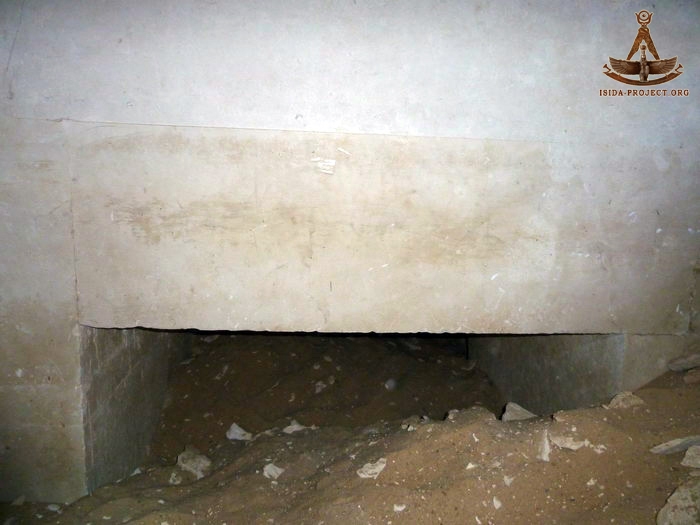
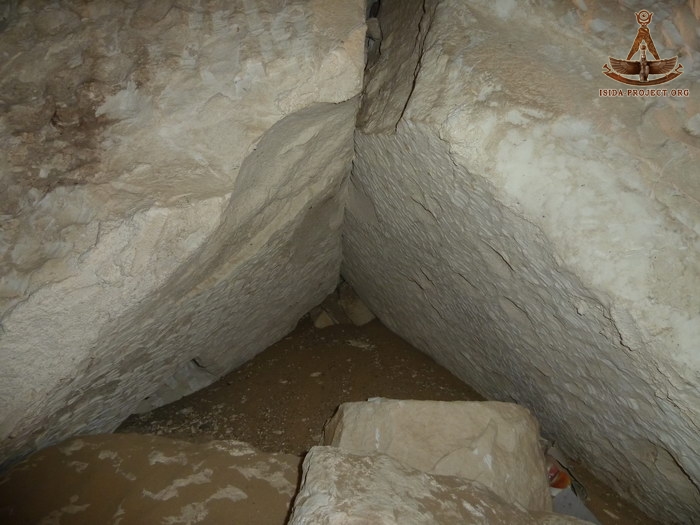
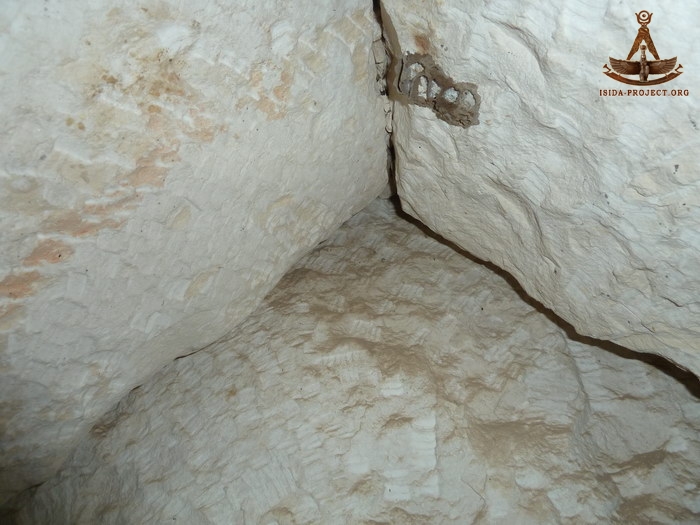
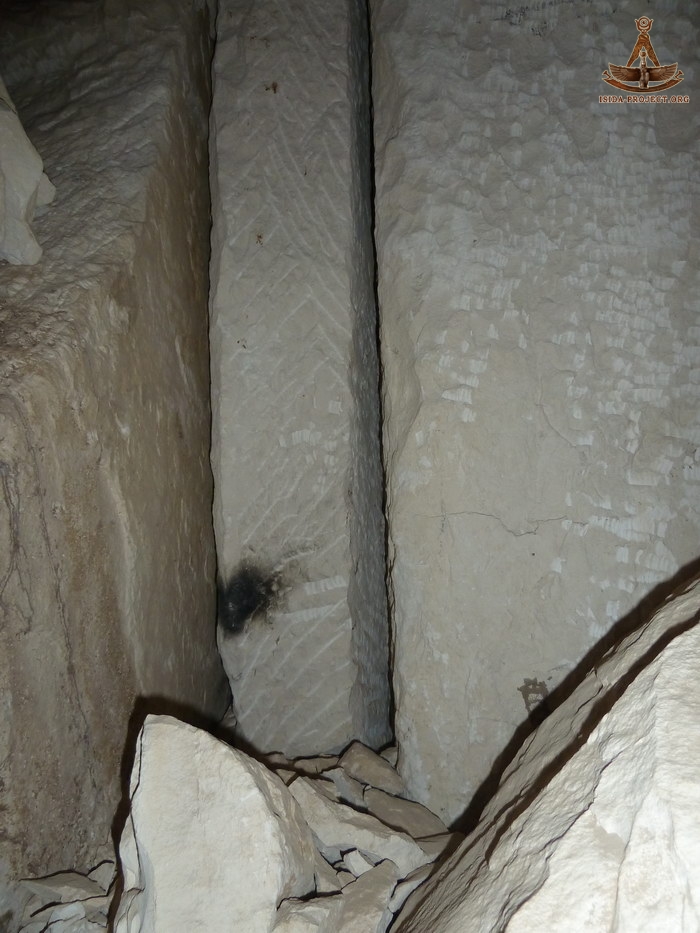
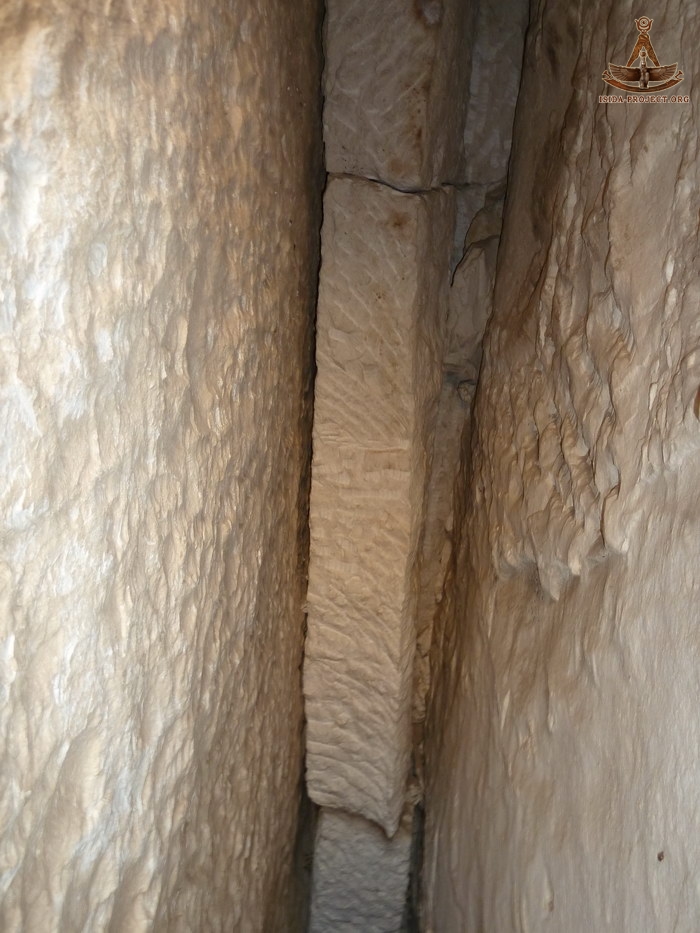
Regarding the lateral eastern niche, which presumably contained the second portcullis, there are two points that indicate that the western portcullis was also vertical. The first and second photographs show the upper vertical step of the niche, which does not allow the portcullis to move horizontally. The third and fourth photographs show a general view of the eastern niche. The last photograph is the bottom of the niche. As can be seen, with a small indentation from the walls, there are grooves in the floor. Upon detailed examination of the floor structure, it was noted that these are not just grooves made in a solid block of limestone, but gaps between the inner walls of the niche and a certain insert, which, probably, may be the surface of the vertical portcullis, which is blocking the entrance to the Lower Chamber of the Pyramid.
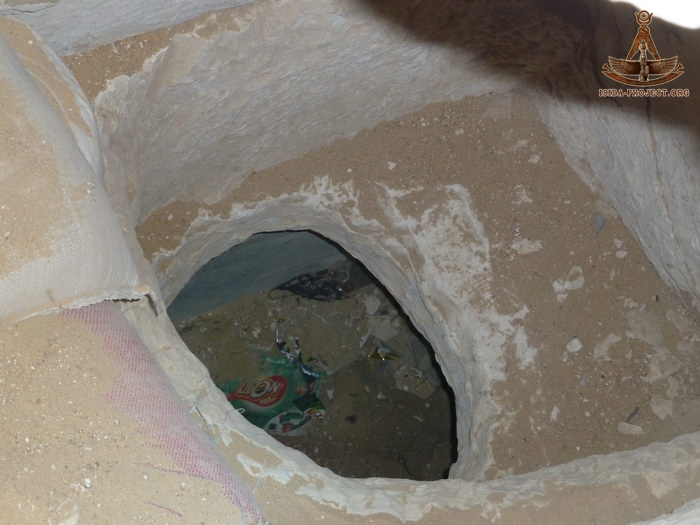
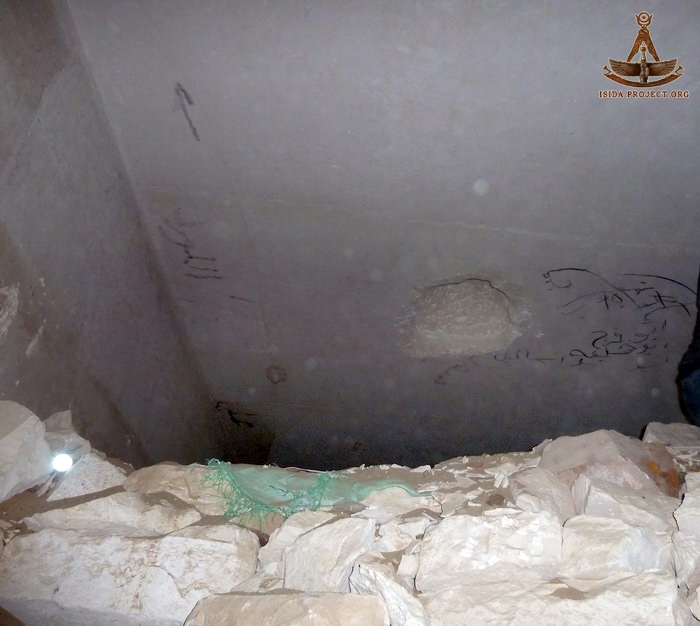
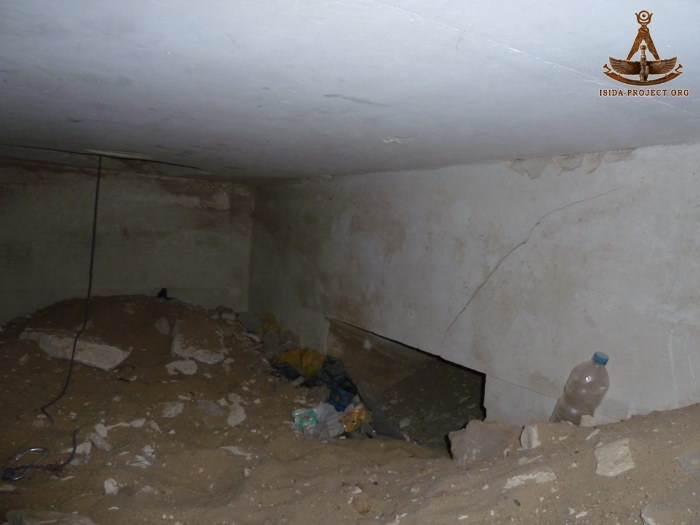
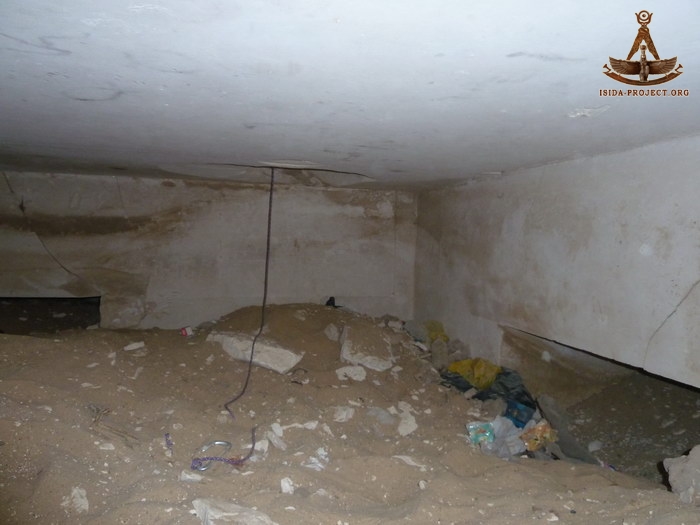
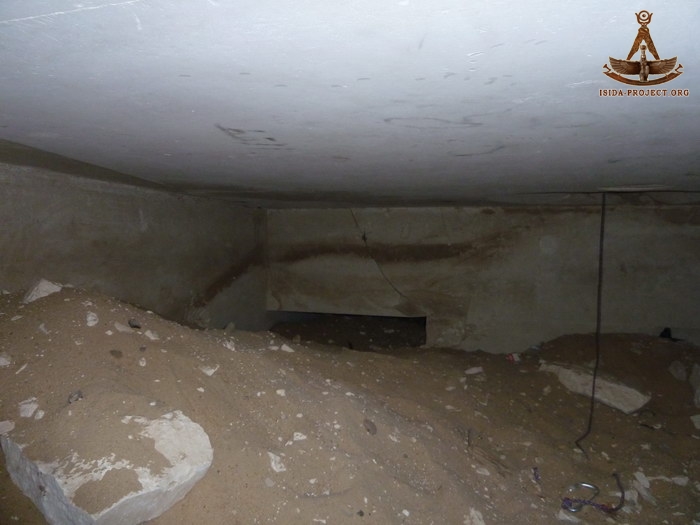
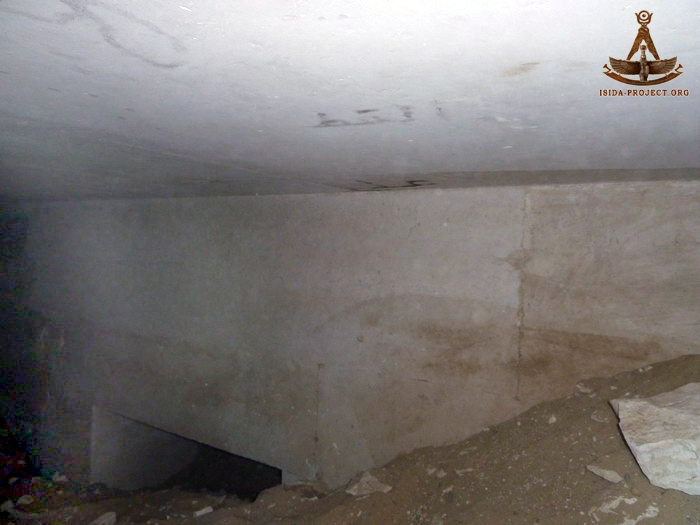
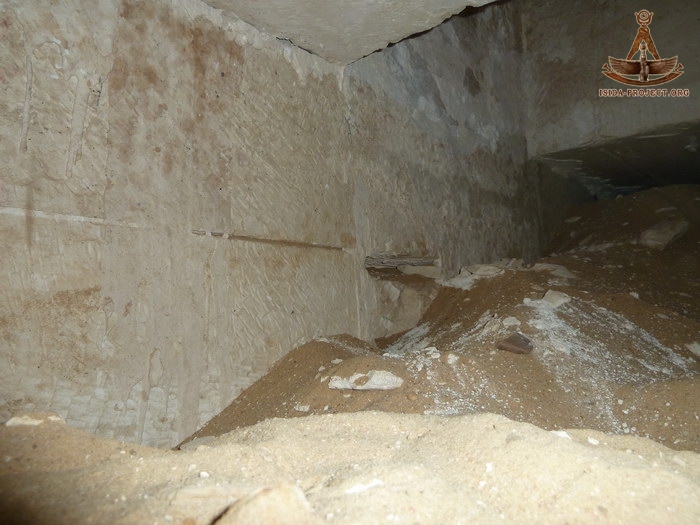
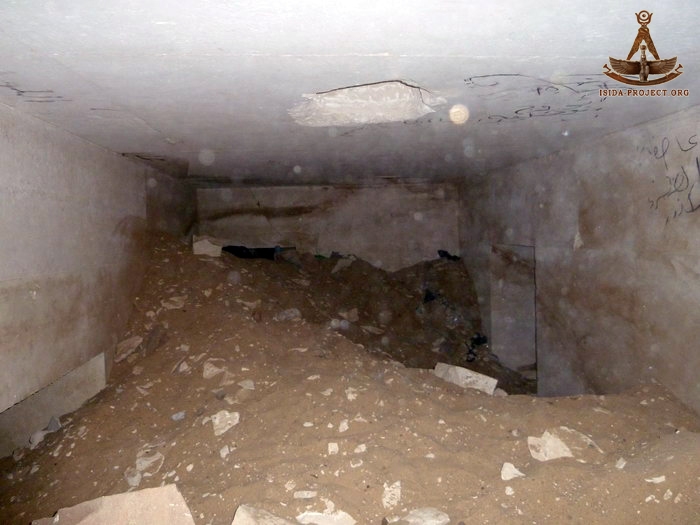
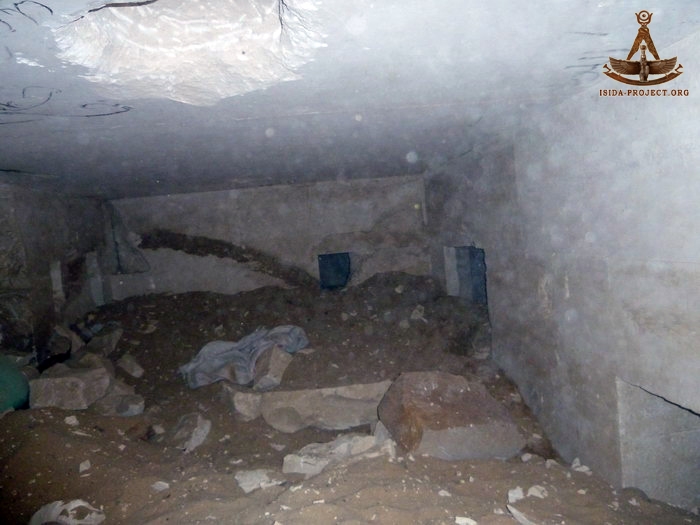
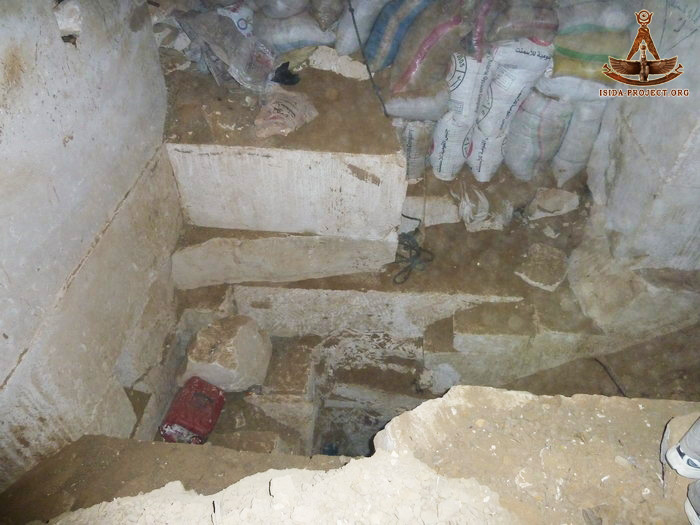
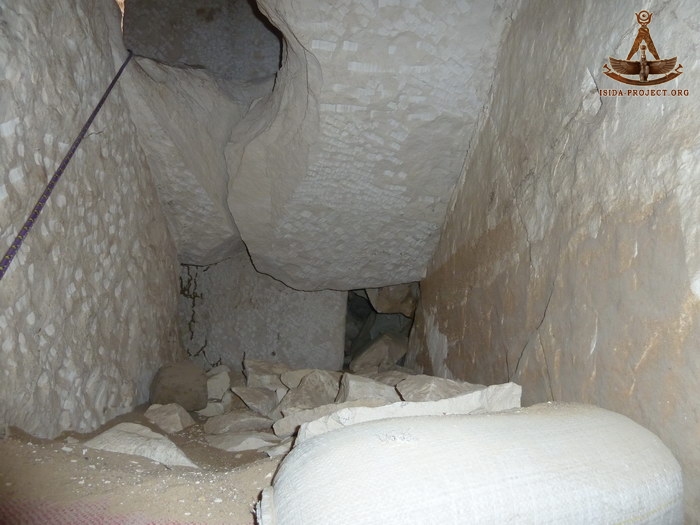
The first image, taken in 2011, shows a general view of the "Upper Chamber" of the Pyramid of Amenemhat II. In the lower right corner is the upper part of the entrance, behind which the Descending Passage begins. Photographs 2-4 show a view of the Descending Passage, recorded in 2012. The last photograph shows a pit leading deep down the Pyramid. Here, the multi-layered masonry of the floor of the "Burial Chamber" is visiblequite clearly.
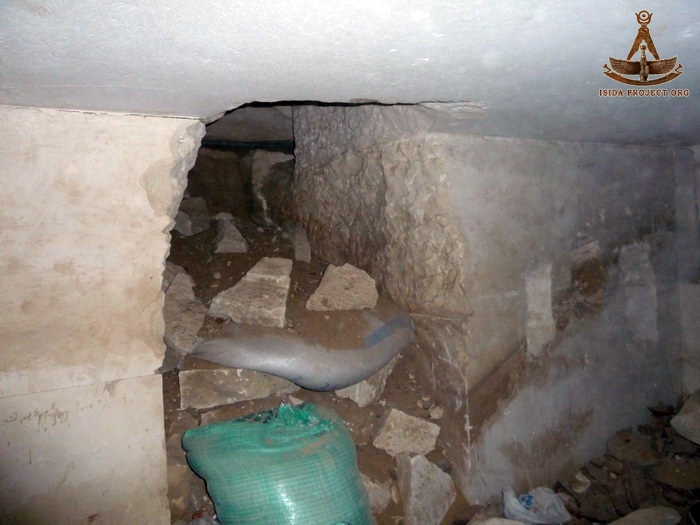
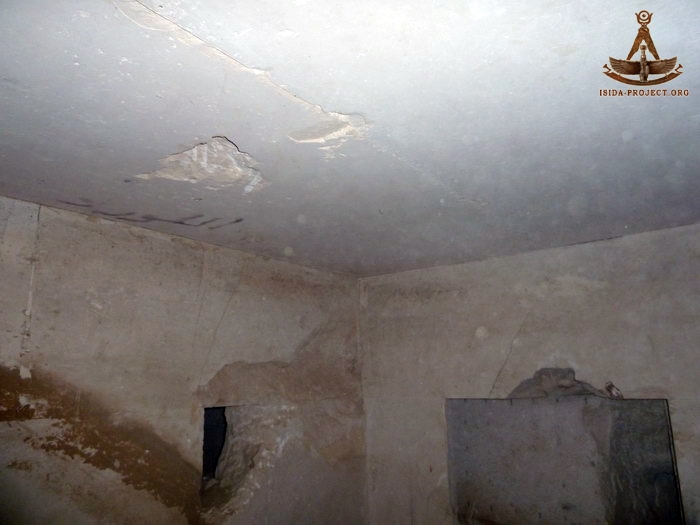
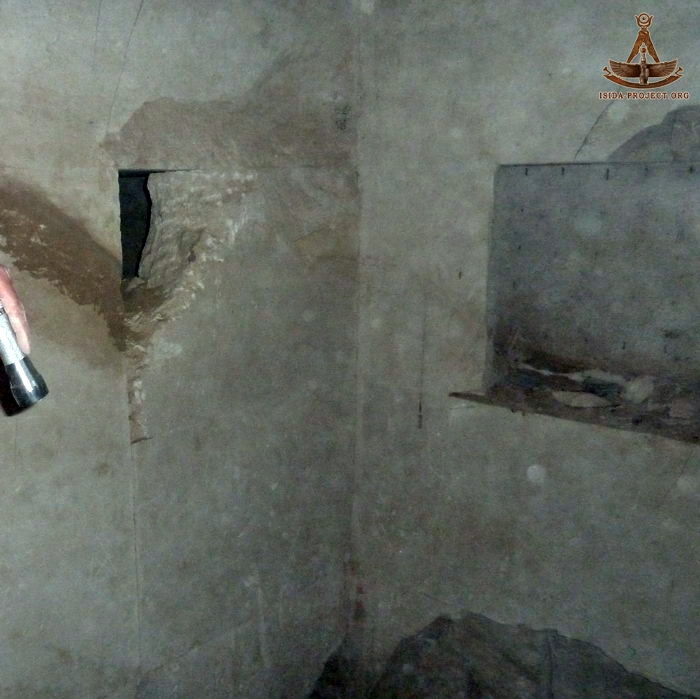
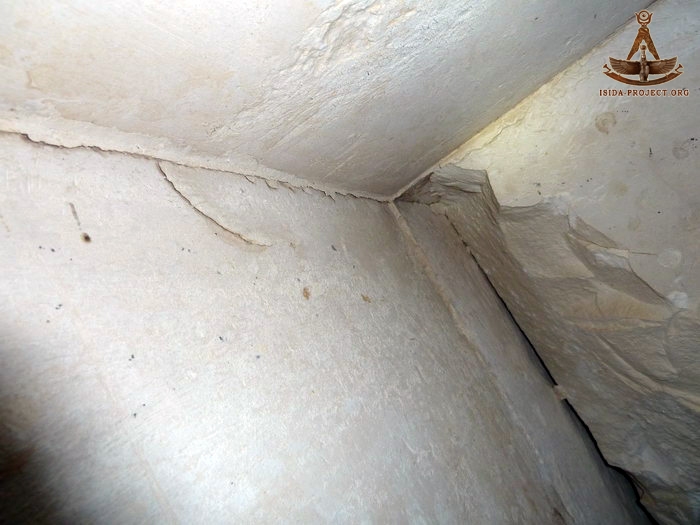
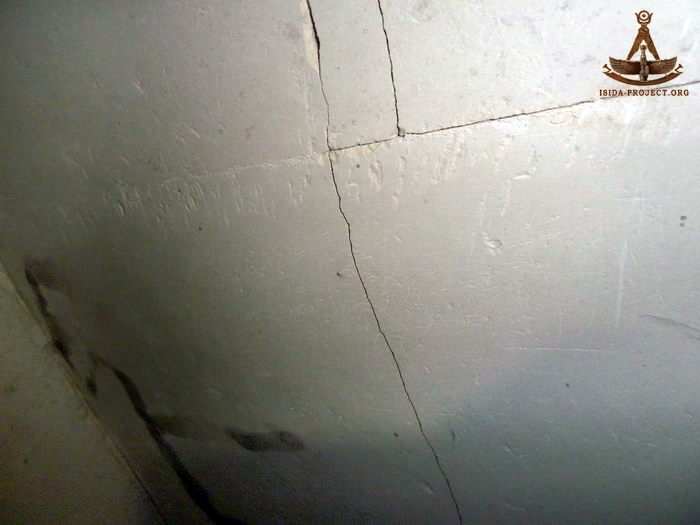
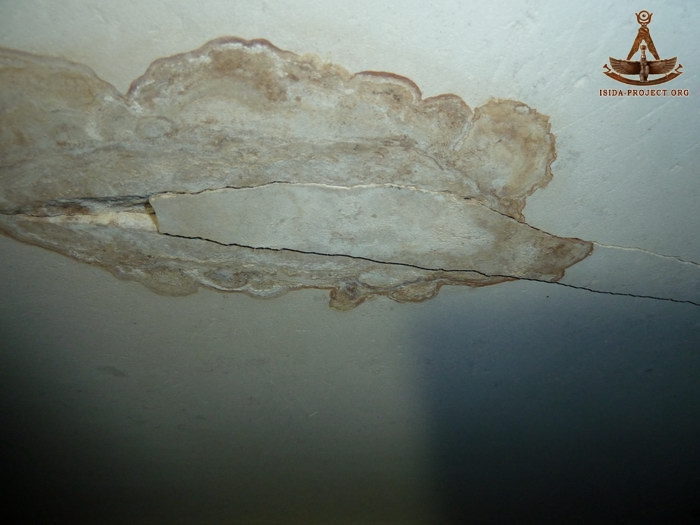
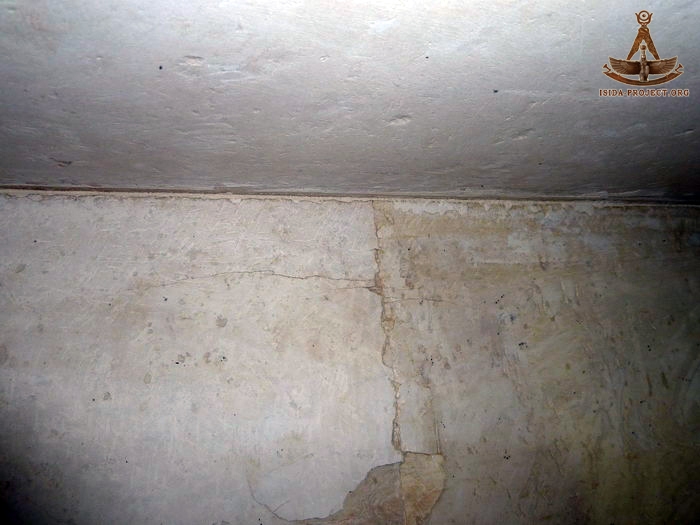
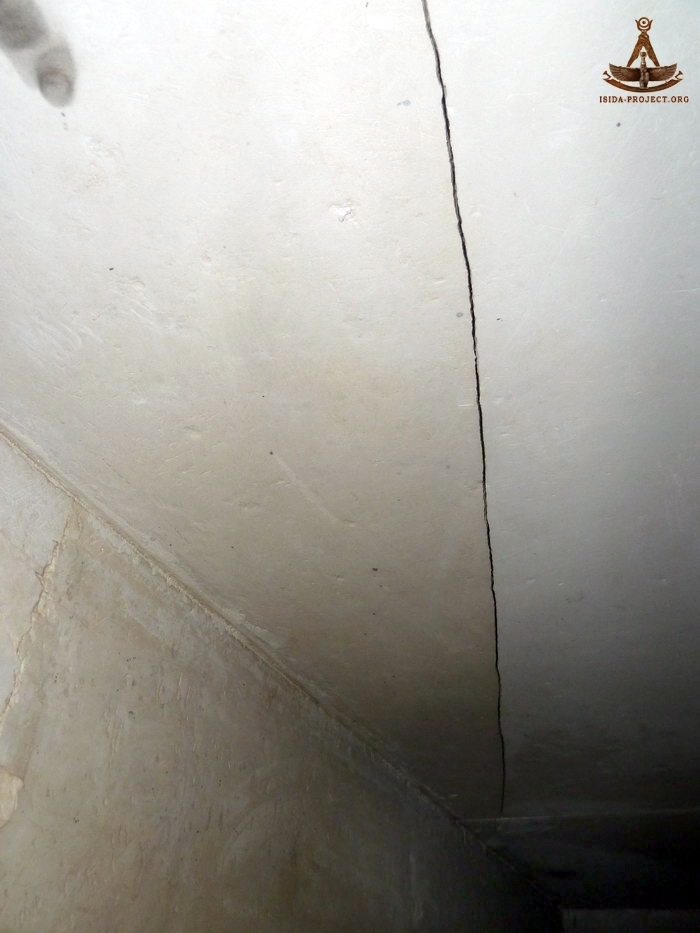
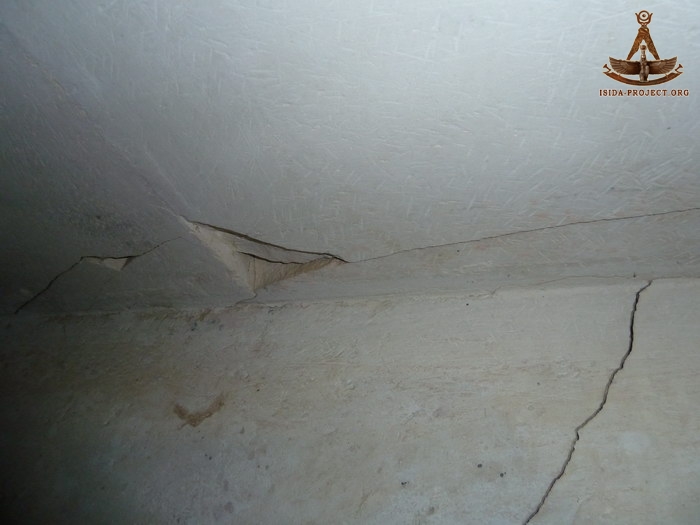
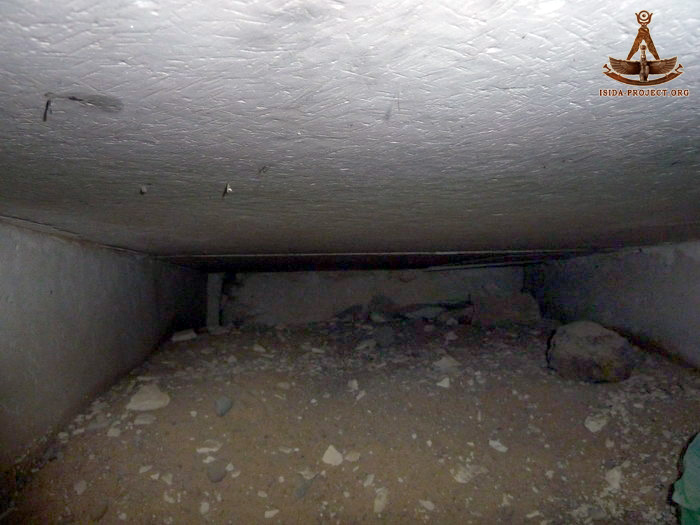
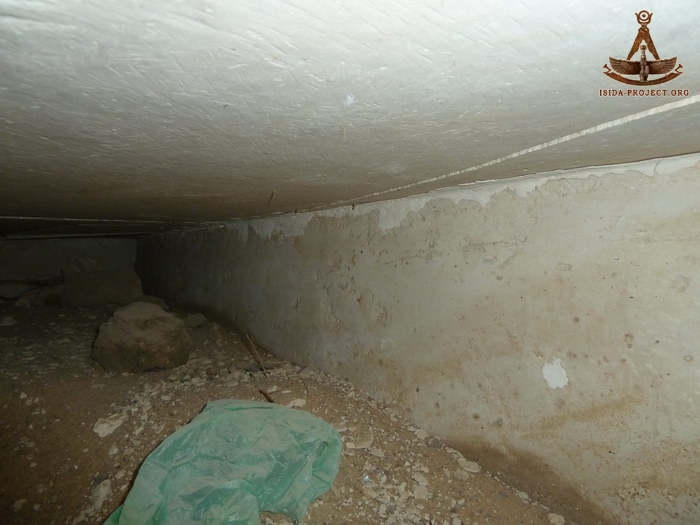
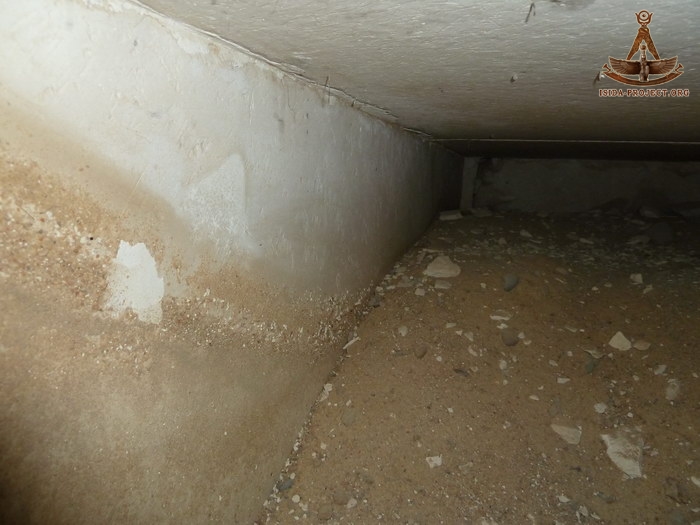
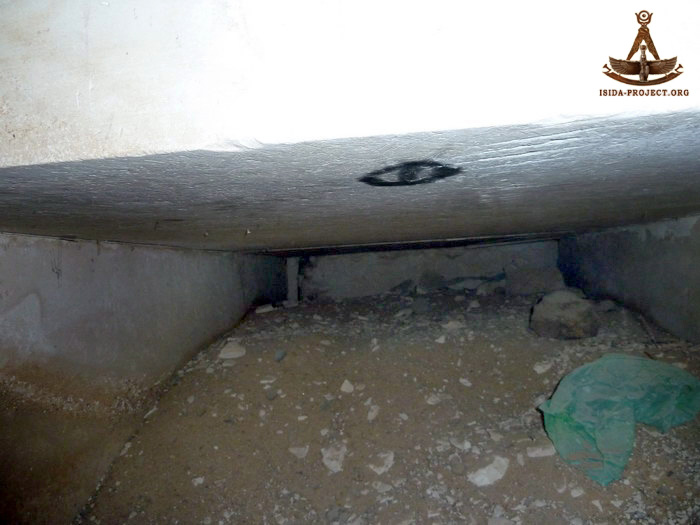
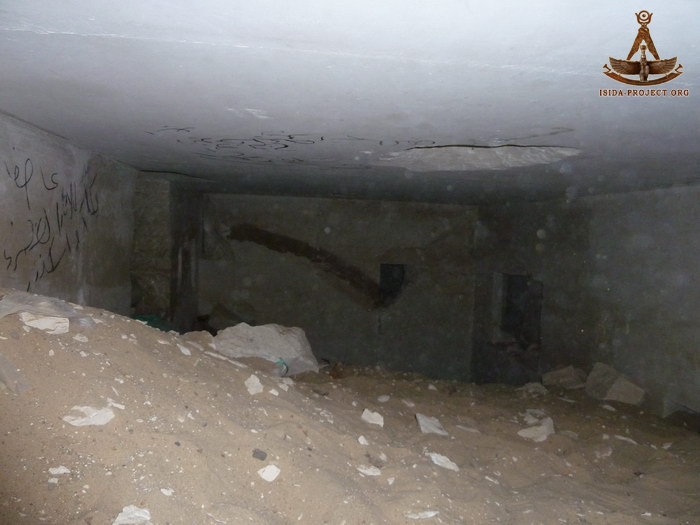
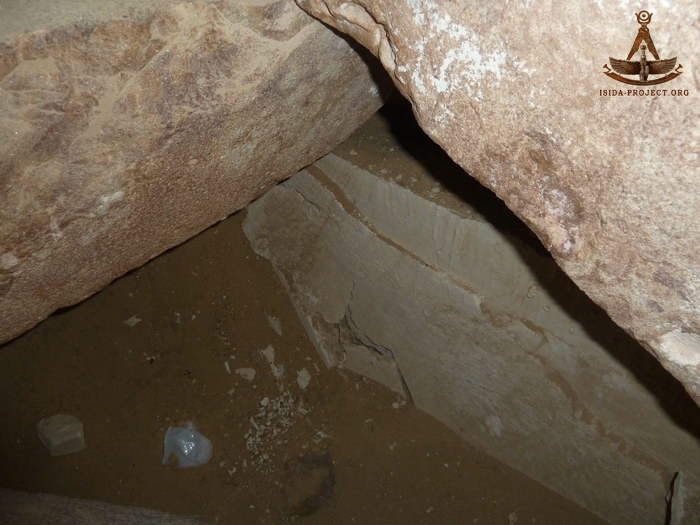
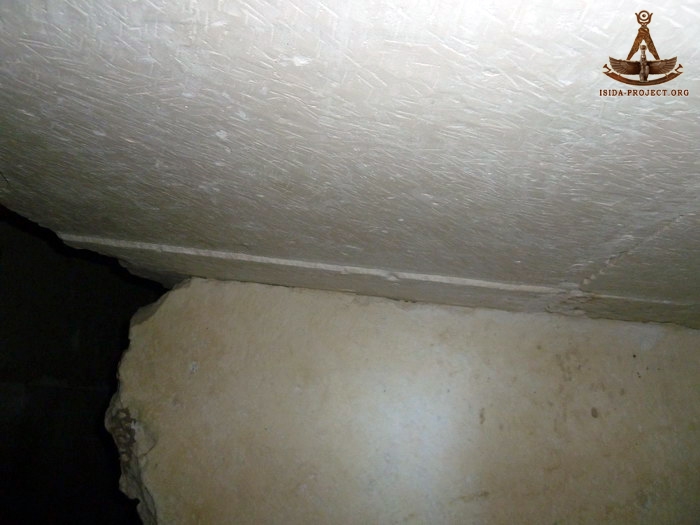
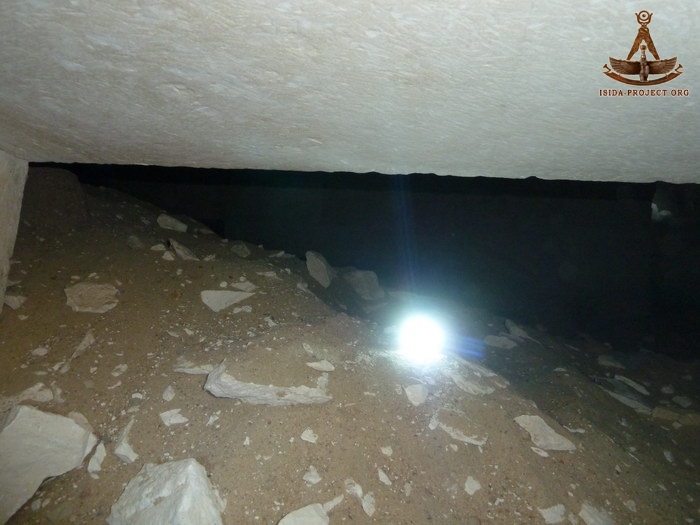
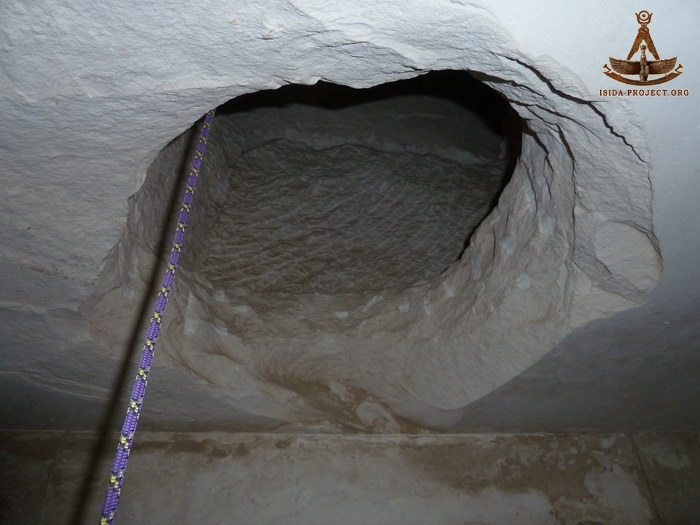
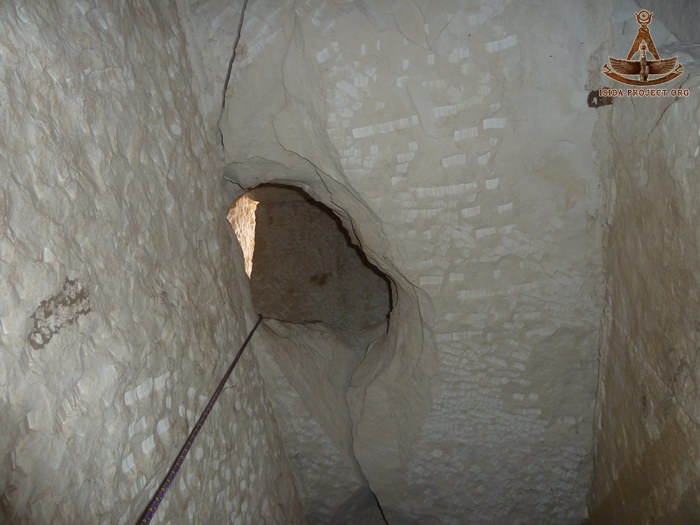
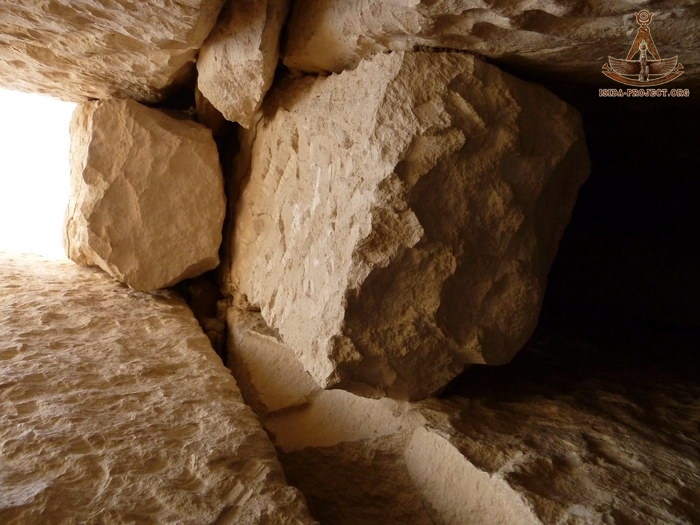
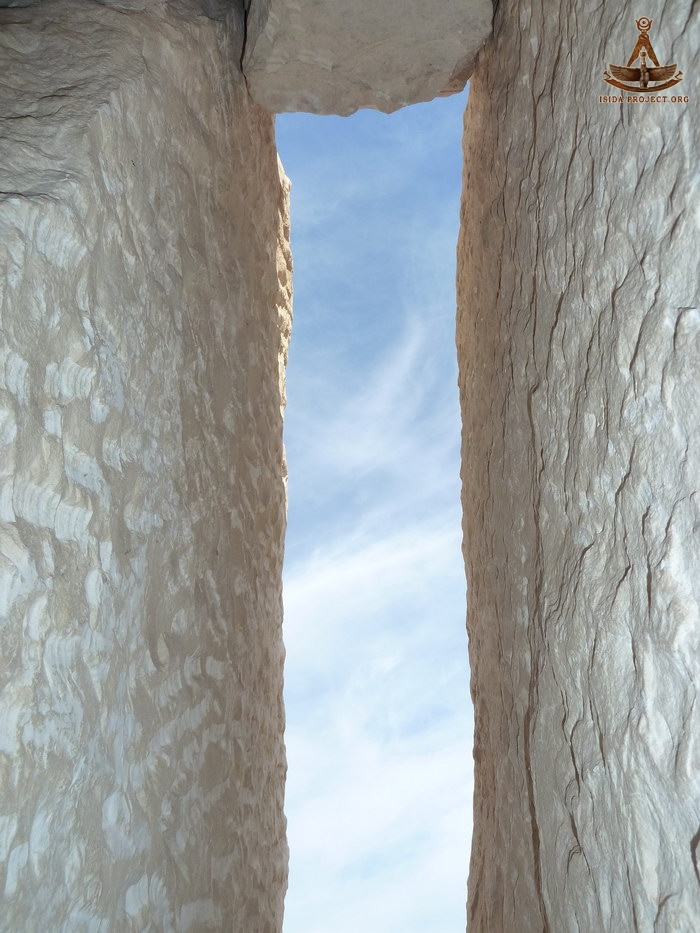
A hole in the ceilong of the first and a gap in the roof of the second Releaving Chamber of the Pyramid of Amenemhat II.
© Copyright 2013 of ISIDA Project. All rights reserved. |
||
 |
 |
 |